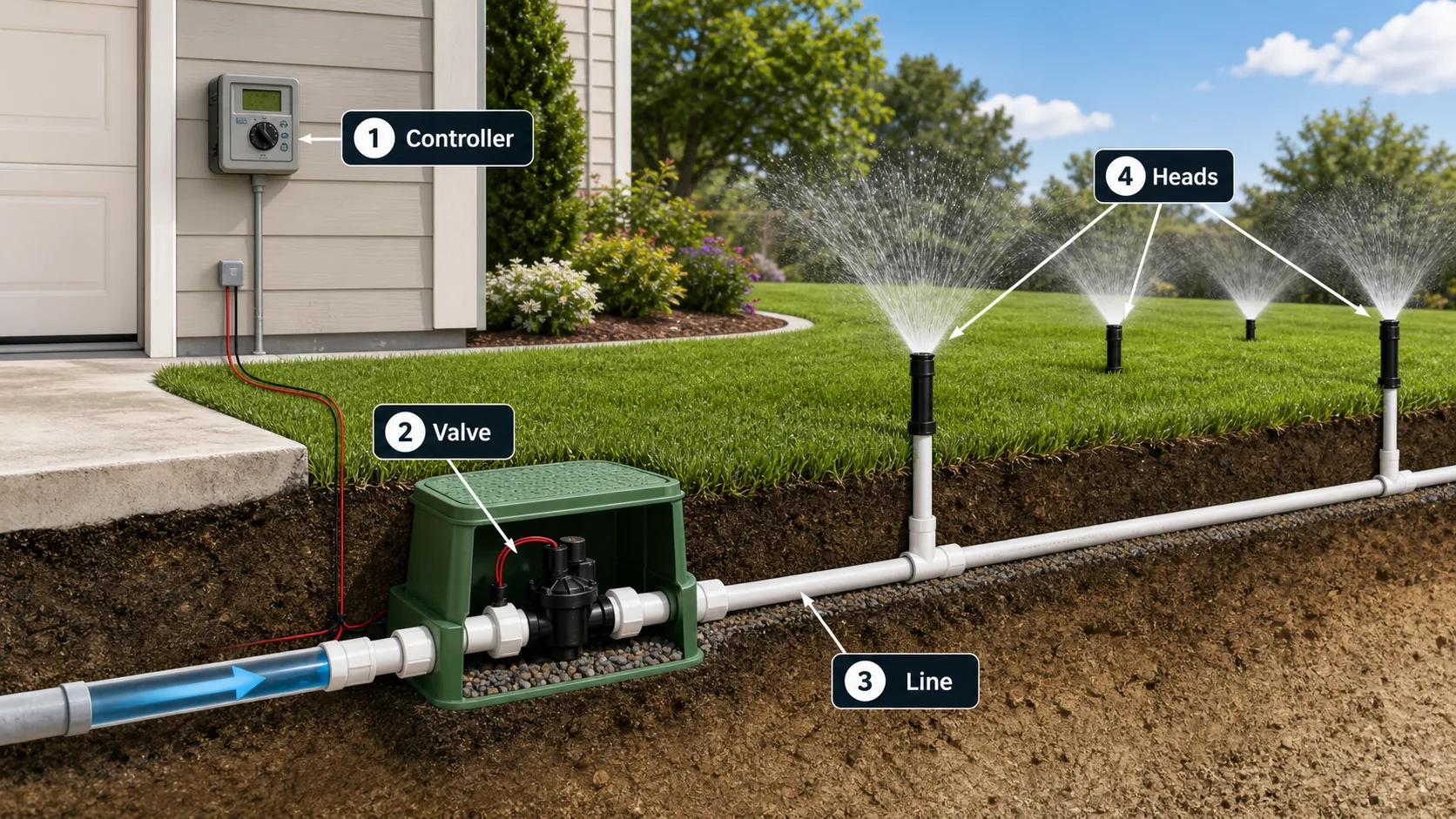
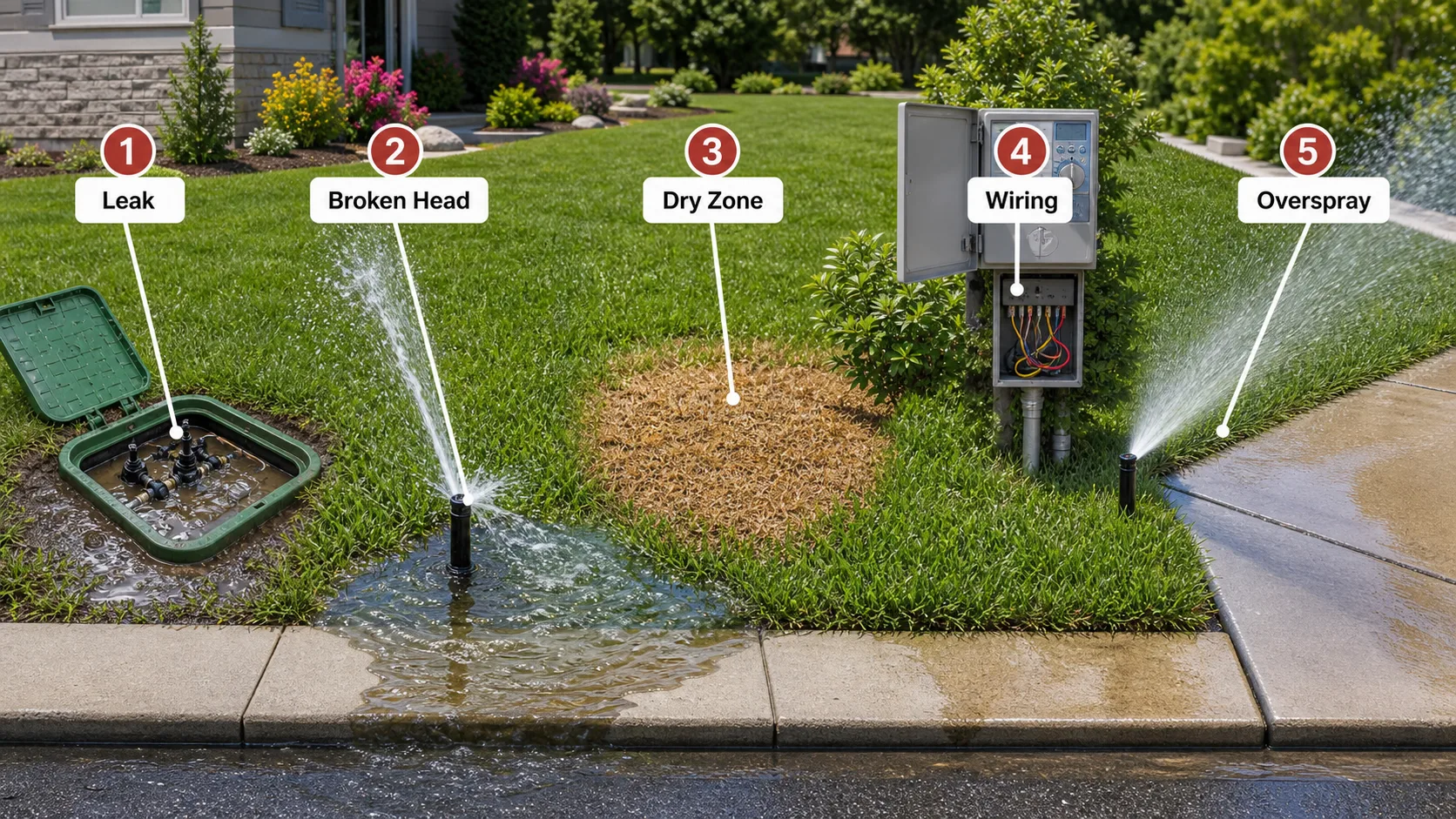
Most residential sprinkler systems in Granbury are built around zones. Each zone is a group of heads that waters one section of the yard at a time. The controller sends a low-voltage signal to the valve for that zone, the valve opens, water moves through buried pipe, and the heads rise or spray according to the available pressure. When everything is working, the homeowner barely notices the process. When one part fails, the symptom can show up as a brown patch, a flooded sidewalk, a zone that never starts, or a zone that refuses to shut off.
The controller is the brain of the system, but it is not always the cause of the problem. A controller can have the wrong start time, a dead backup battery, a bad transformer, loose station wiring, or a rain sensor setting that keeps watering from starting. It can also be working correctly while a field wire, solenoid, or valve fails outside. That is why a repair visit often begins by testing whether the controller is sending voltage and then checking whether the valve is actually responding.
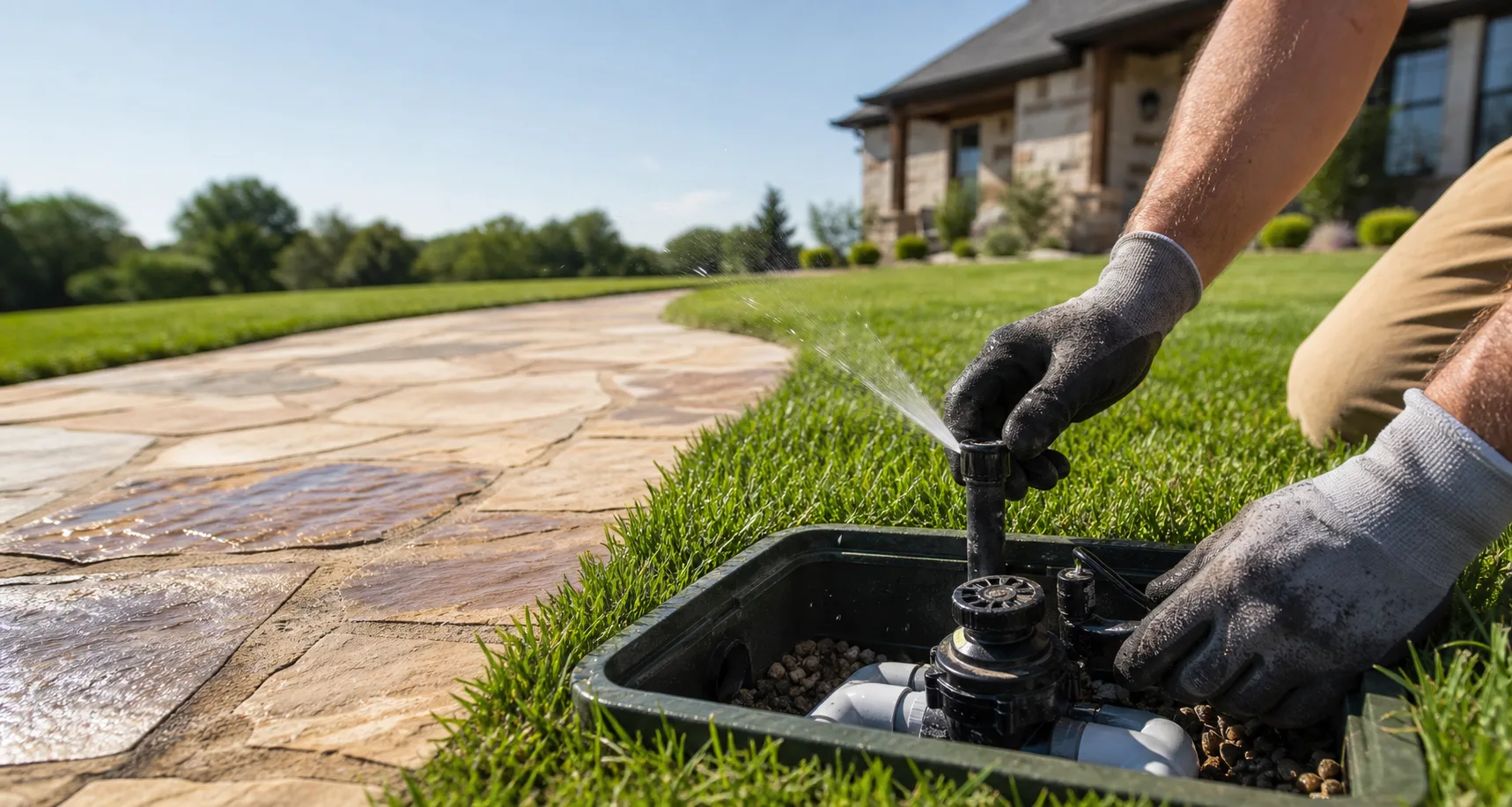
The valve is the gate for each zone. Inside the valve box, an electric solenoid receives the signal from the controller and allows the valve diaphragm to open. If dirt, age, hard water deposits, wire damage, or a worn diaphragm interferes with that process, the zone may chatter, seep, run weakly, or stay on. A valve problem is especially likely when the lowest head in a zone keeps leaking after the controller is off, when a valve box stays full of water, or when one zone behaves differently from every other zone.
Sprinkler heads are the most visible part of the system, but replacing a head without checking the rest of the zone can miss the real issue. A mower can crack a head. Soil movement can tilt a riser. Grass can grow over a nozzle. A clogged screen can create a dry patch. But poor coverage can also come from low pressure, a hidden line leak, mixed nozzle types, or too many heads on one zone. A proper sprinkler head repair checks height, angle, nozzle pattern, spray distance, and whether nearby heads are overlapping enough to water evenly.
Leaks need special attention because water can travel underground before it appears at the surface. A wet area near a head may be a cracked riser, but water by a driveway may come from a lateral line under the edge of the concrete. A valve box full of water can come from a valve leak, a fitting leak, or poor drainage around the box. In Granbury heat, a leak also has two costs: wasted water and uneven lawn stress. One section may stay soggy while another section dries out because pressure drops before water reaches the far heads.
Low pressure is another symptom that can have several causes. If every zone is weak, the problem may be the supply, shutoff valve, backflow component, or main line. If only one zone is weak, the repair person will usually look for a zone leak, clogged nozzle, partially opening valve, crushed pipe, or design mismatch. Homeowners can help by noticing whether low pressure started suddenly or slowly. A sudden change often points to a break or failed component. A slow decline may suggest clogging, wear, or gradual soil movement around heads and lines.
Overspray is not just a nuisance. Water hitting sidewalks, driveways, fences, or the house can waste money and create slippery surfaces. Sometimes the fix is simple adjustment. Other times the zone needs a different nozzle, a raised or straightened head, or a pressure-regulating part. In neighborhoods with mature landscaping, shrubs and tree roots can also change the way water reaches the lawn. A head that was correct years ago may now be blocked by growth or pointed into a bed that no longer needs the same pattern.
Granbury and Hood County conditions make diagnosis matter. Summer heat can expose coverage problems quickly. Clay-heavy soil pockets can hold water and make leaks look worse in one part of the yard. Rocky areas can make underground repairs less predictable. Seasonal watering schedules also matter because a controller that runs too often can hide a coverage issue until water restrictions or hotter weather reveal the dry spots. Local repair knowledge is valuable because the best fix is not always the newest controller or the most expensive replacement.
Before requesting sprinkler repair, a homeowner should collect a few details. Which zone has the issue? Does the problem happen only while the system runs, or does water continue afterward? Is the wet spot near a head, valve box, sidewalk, driveway, or foundation? Has recent mowing, digging, landscaping, fence work, or utility work happened nearby? Does the controller show an error or run at the wrong time? These notes can shorten the diagnostic visit and help the technician bring the right parts.
There are also situations where waiting is risky. A zone that will not shut off, water running into the street, a leak near the foundation, an exposed broken pipe, or a saturated valve box should be handled quickly. If the irrigation shutoff is accessible and safe to use, turning off the system can reduce water waste until repair help arrives. Smaller issues like overspray, a single clogged nozzle, or a seasonal schedule change are less urgent, but they are still worth fixing before they become dead turf, high water use, or repeated service calls.
A trustworthy sprinkler repair process usually follows a sequence: listen to the symptom, identify the zone, test controller output, inspect the valve, watch the zone run, check pressure and coverage, then repair the failed part. That sequence matters because sprinkler systems are connected. A broken head may be the only visible issue, but a weak zone could also have a valve or pipe problem. The goal is not just to make water spray again. The goal is to restore reliable coverage while avoiding waste, runoff, and repeat failures.
For Granbury homeowners, the practical next step is simple: describe the symptom clearly, request a callback, and be ready to point out the affected zone. Whether the issue is a stuck valve, broken sprinkler head, leak, controller problem, wiring fault, or dry section of lawn, better information leads to faster troubleshooting. This site is built to help local homeowners understand the system, request help, and route qualified sprinkler repair calls in a way that can be tracked and improved over time.