
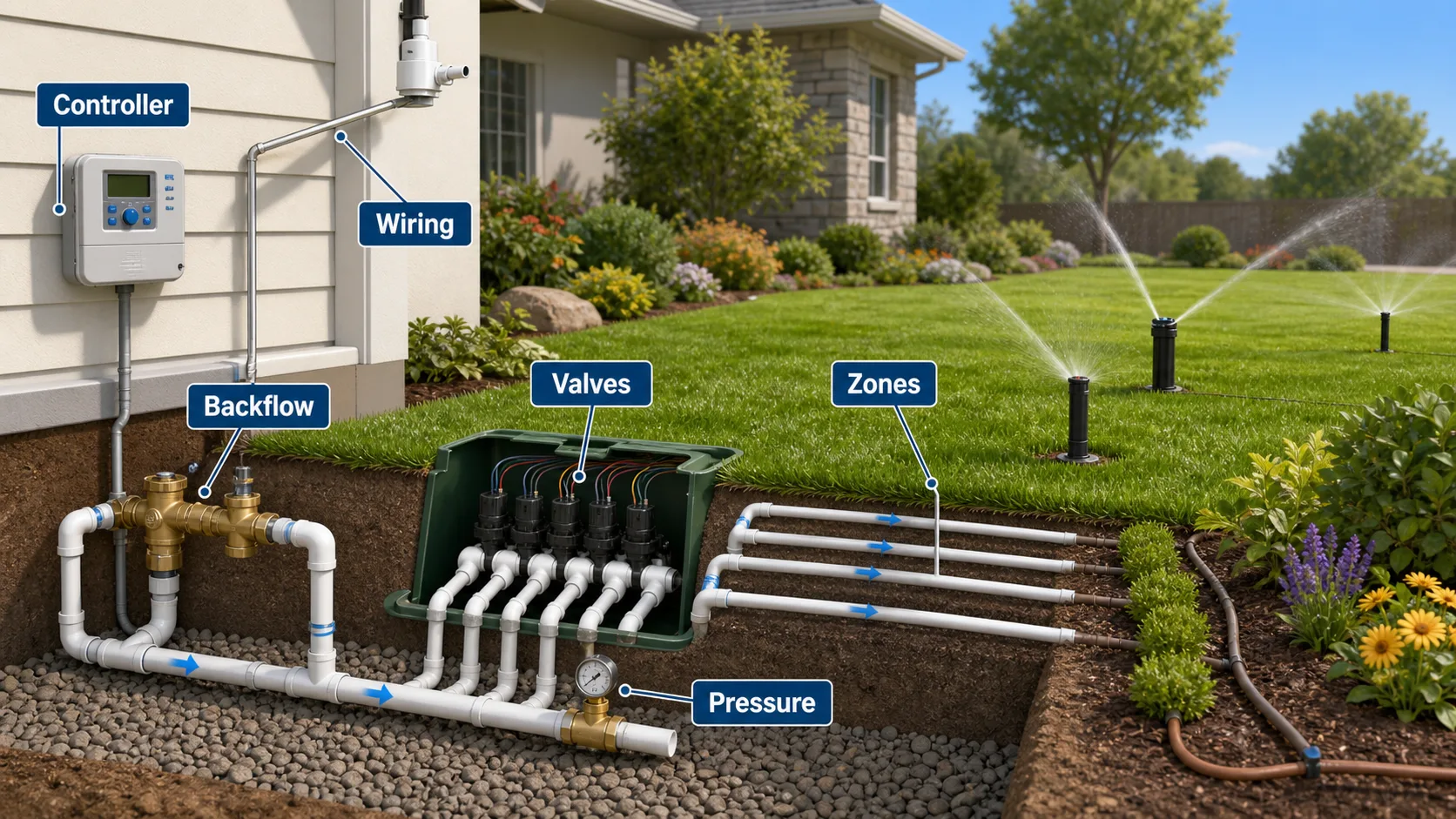
A residential irrigation system has two main paths: the water path and the control path. The water path starts at the supply, passes through backflow protection where required, moves through a main line, opens at a valve, and then travels through lateral lines to heads or drip tubing. The control path starts at the controller, moves through low-voltage wires, and energizes the solenoid for each zone. Good irrigation repair checks both paths.
If every zone is weak, the issue may be near the supply side. A partially closed shutoff, pressure problem, backflow issue, main line leak, or system-wide restriction can affect the whole yard. If only one zone is weak, the cause is usually more local: a valve that does not open fully, a lateral line leak, clogged nozzles, too many heads, or mismatched components on that one zone.
Controller issues can mimic water problems. A bad transformer can keep the system from starting. Loose station wires can make one zone unreliable. A rain sensor can interrupt watering even when the controller display looks normal. Duplicate start times can make the entire system run more often than expected. That is why a technician may inspect the controller before digging into the yard.
Valve diagnostics are a major part of irrigation repair. Valves sit underground in boxes and control individual zones. Dirt, worn diaphragms, damaged solenoids, bad wire connections, and slow seepage can all cause symptoms that show up far away from the valve box. A stuck valve can keep a zone running. A weak valve can leave heads sputtering. A leaking valve can create constant wet spots at the lowest heads.
Pressure and coverage checks connect the diagnosis to what the homeowner sees. Heads need enough pressure to rise, seal, and throw water correctly. Too little pressure creates weak spray and dry patches. Too much pressure can mist, drift, and waste water. Coverage also depends on head spacing, nozzle size, arc settings, and whether landscaping now blocks the original spray pattern.
Drip irrigation adds another diagnostic layer. A bed zone may not have visible spray, so homeowners may only notice wilting plants, wet mulch, or a soggy edge. Drip tubing can clog, split, disconnect, or be damaged by planting work. Because drip zones operate differently from spray zones, the repair approach should match the equipment instead of assuming every zone should look the same when it runs.
Backflow and shutoff locations also matter for irrigation troubleshooting. A technician may need to know where the system can be isolated before checking a leak or valve issue. If a repair involves regulated backflow components, the homeowner should verify that the person handling that part has the right qualifications. Ordinary irrigation repair and regulated testing are related, but they are not always the same service.
The best time to diagnose an irrigation issue is often while the zone is actively running. That lets the repair person see pressure, spray shape, head spacing, pooling, and drainage. Photos or notes from the homeowner help, but watching the system cycle is usually more useful than looking at dry parts after the fact.
Granbury conditions make this system-level view important. Heat exposes dry zones quickly, while soil movement and rocky areas can stress buried fittings. Seasonal schedule changes can hide or reveal problems. A smart repair approach starts with the symptom but keeps checking until the cause is clear. That reduces repeat calls and helps the system water the lawn instead of sidewalks, beds, or already-wet soil.