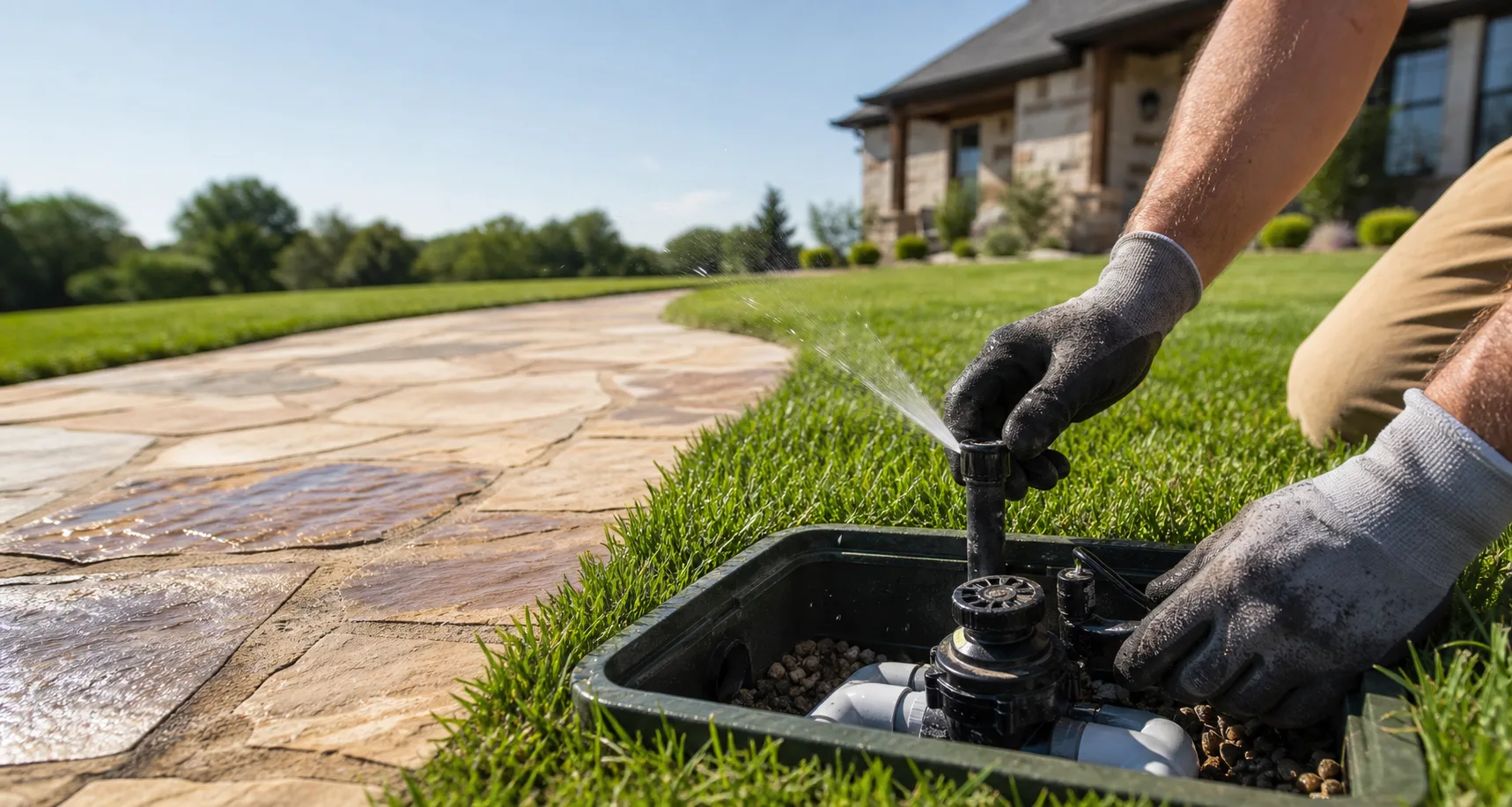
An irrigation system connects a home or property water supply to buried lines, valves, and sprinkler heads outside. Under the wrong conditions, water can try to move backward. A backflow prevention assembly is designed to reduce that risk and protect the drinking water side of the system. That is why backflow is treated differently from ordinary sprinkler head repair.
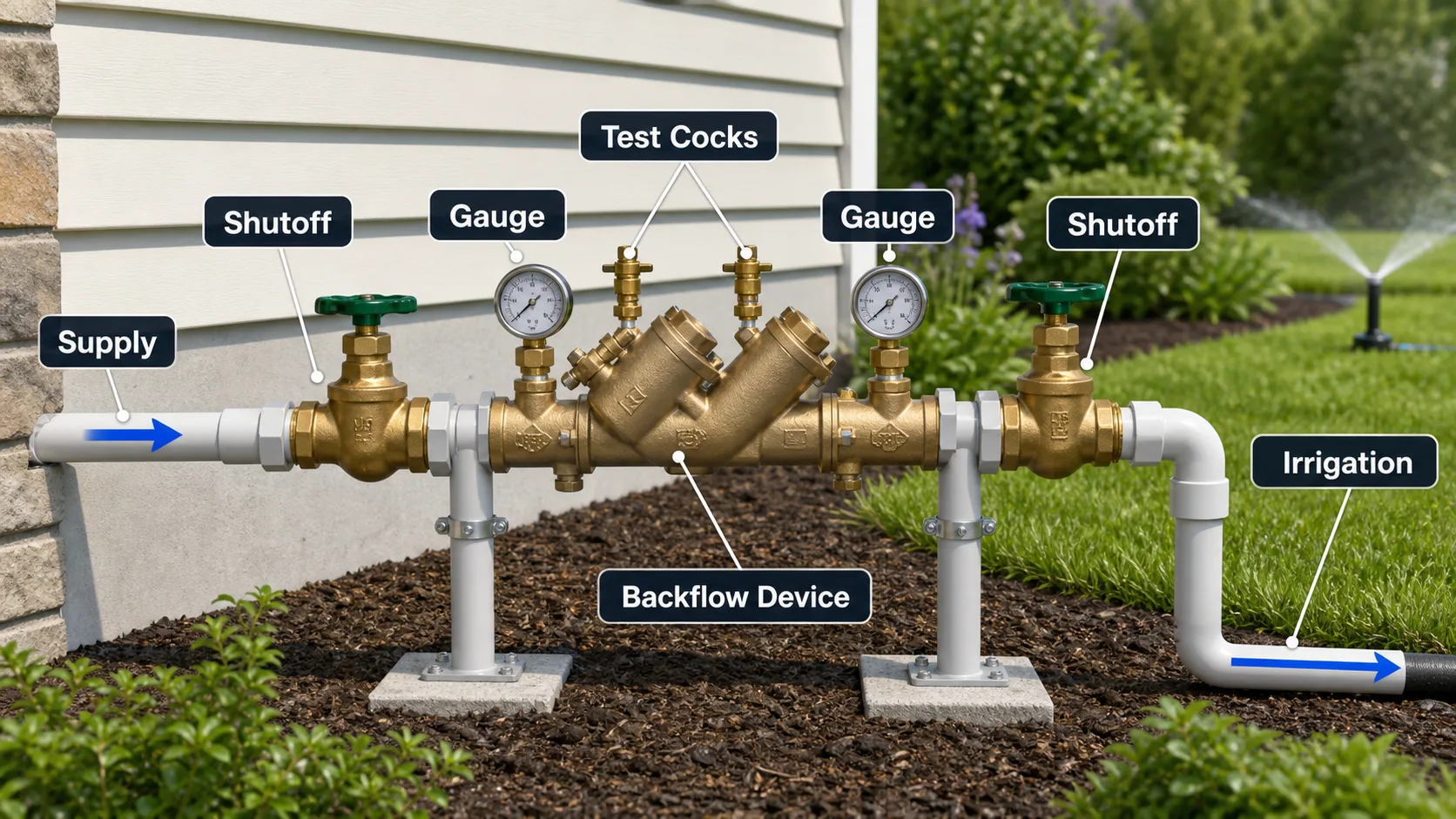
A backflow assembly may include shutoff valves, test cocks, check components, and access points for gauges. Testing is not simply looking at the device. A qualified tester uses the proper equipment and follows the applicable procedure for that type of assembly. The result may need to be documented for a water provider or property record depending on local requirements.
Homeowners often ask about backflow when installing an irrigation system, repairing a system that has been off for a while, selling a home, receiving a notice, or seeing a leak around the device. The right next step depends on the device type, provider rules, and whether the issue is testing, repair, replacement, freeze damage, or an irrigation-side problem nearby.
Not every sprinkler repair person is automatically qualified to test backflow. Before hiring for backflow testing in Granbury or Hood County, ask whether the person has the required license or certification for the work being performed. If the job involves regulated testing or reporting, credentials matter more than convenience.
A leaking backflow assembly should be taken seriously, but not every visible drip means the same thing. Water can come from a shutoff, fitting, relief area, freeze-damaged component, or nearby irrigation pipe. A qualified professional can determine whether the assembly needs service, whether the irrigation line is leaking, or whether a related sprinkler repair is causing water to collect near the device.
Backflow devices should also stay accessible. Landscaping, mulch, soil buildup, or decorative covers can make testing and repair harder. If a notice requires testing, the professional needs room to access shutoffs and test points. Keeping the area clear can reduce appointment delays.
If a backflow device is damaged after freezing weather or impact, it may affect the irrigation system downstream. A homeowner might notice low pressure, leaks around the assembly, or zones that behave differently after the device is opened or closed. Those symptoms should be described when requesting help.
Because backflow rules can vary by provider and device type, homeowners should treat backflow information as a starting point and verify the requirements for their own property. The safest approach is to ask for credentials, confirm reporting requirements, and keep documentation when testing is completed.
This site can help homeowners understand the issue and request routing, but it should not replace local compliance requirements. For backflow-related work, verify qualifications, keep records when required, and follow the instructions from the water provider or local authority.