
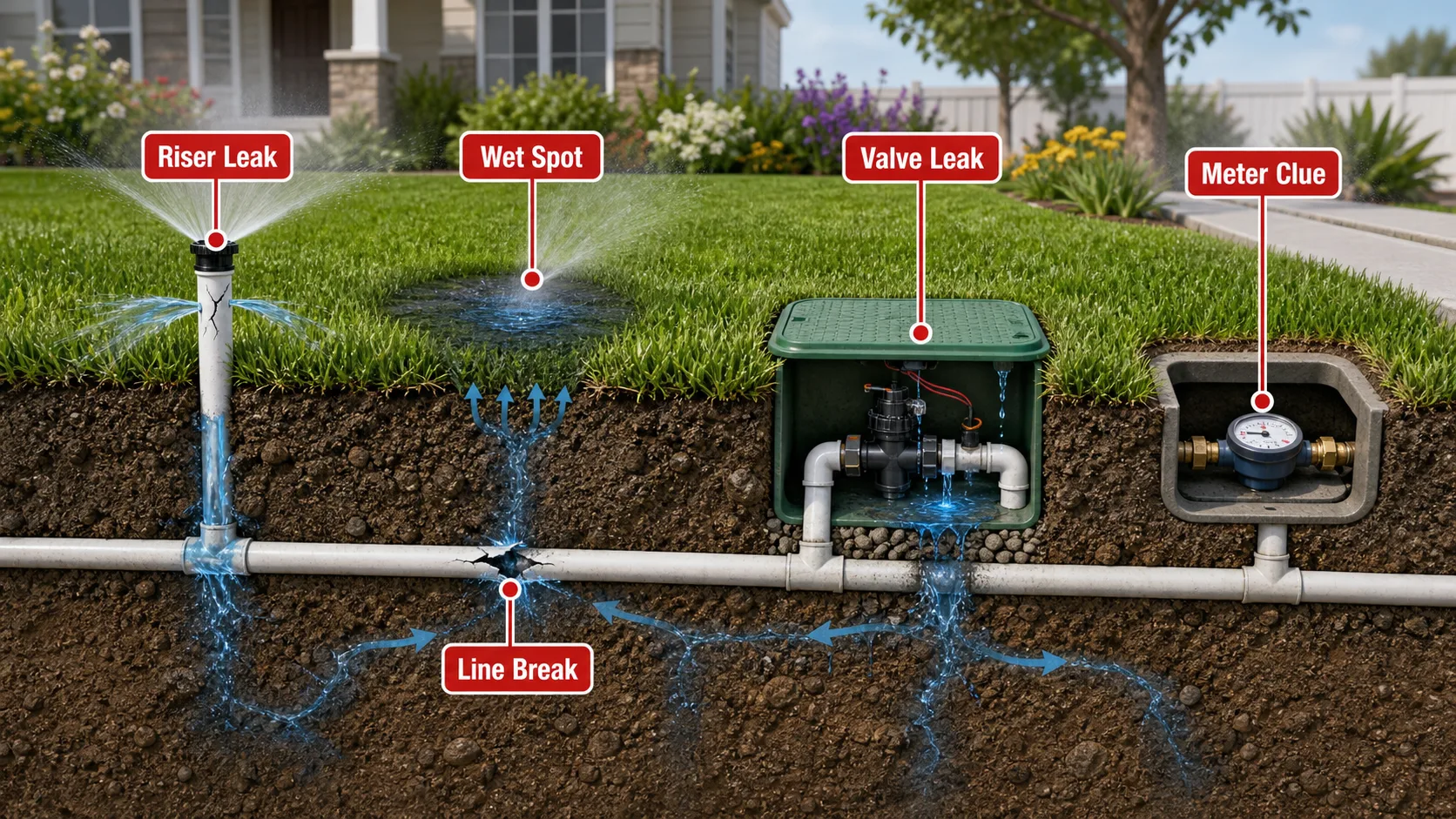
A leak at a sprinkler head may be a cracked head body, broken riser, loose fitting, or damaged swing joint. These leaks usually show up only while the zone is running. Water may bubble around the head, spray from the base, or flood the nearby sidewalk. If the head is also tilted or sunken, the repair may include both the leak and the head position.
A lateral line break is the buried pipe that feeds heads within one zone. These leaks often create a wet spot or soft ground between heads. The affected zone may have lower pressure, weak spray, or heads that do not fully rise. If the break is large, water can surface quickly. If it is small, the wet area may only appear after repeated watering cycles.
Valve leaks behave differently. A valve that does not seal can allow slow seepage even when the controller is off. The lowest head in the zone may dribble, or a valve box may stay wet. Homeowners sometimes think the lowest head is bad when the valve upstream is the real cause. Valve leaks can waste water quietly because they do not always look dramatic.
Supply-side leaks are more serious because they may leak even when no zone is running. A constantly moving meter, wet soil near the main line, or water near the backflow or shutoff can point to a leak before the zone valves. If water is continuous or near the foundation, the irrigation supply should be shut off if it is safe and accessible.
Good leak repair starts with timing. Does the water appear only during one zone? Does it continue after watering ends? Does every zone lose pressure, or only one? Is the wet spot near a head, pipe run, valve box, driveway edge, or foundation? These details narrow the search and reduce unnecessary digging.
The location of the wet spot is only a clue, not proof. Water can follow pipe trenches, roots, compacted soil, or hardscape edges before surfacing. A leak near a driveway may originate under the lawn. Water by a valve box may be from the box, a nearby fitting, or a line passing under it. Careful diagnosis avoids digging in the wrong place.
A high water bill can also point to a sprinkler leak, especially when the controller schedule has not changed. If the meter moves while no fixtures are running and the irrigation supply is open, that is worth investigating. Homeowners should avoid assuming the lawn simply needs less water until the system is checked for hidden loss.
After a leak is repaired, the zone should be tested again under pressure. The technician should confirm that heads rise correctly, spray patterns return, and the repair area holds without seepage. Fixing the broken pipe is only part of the job; restoring the zone performance is what protects the lawn and water bill.
Granbury heat makes leak repair important because a leaking system can waste water while still leaving parts of the lawn dry. Pressure lost through a leak means far heads may underperform. A repair should restore the broken component, check pressure after the fix, and confirm that the zone covers the lawn correctly once water is no longer escaping underground.