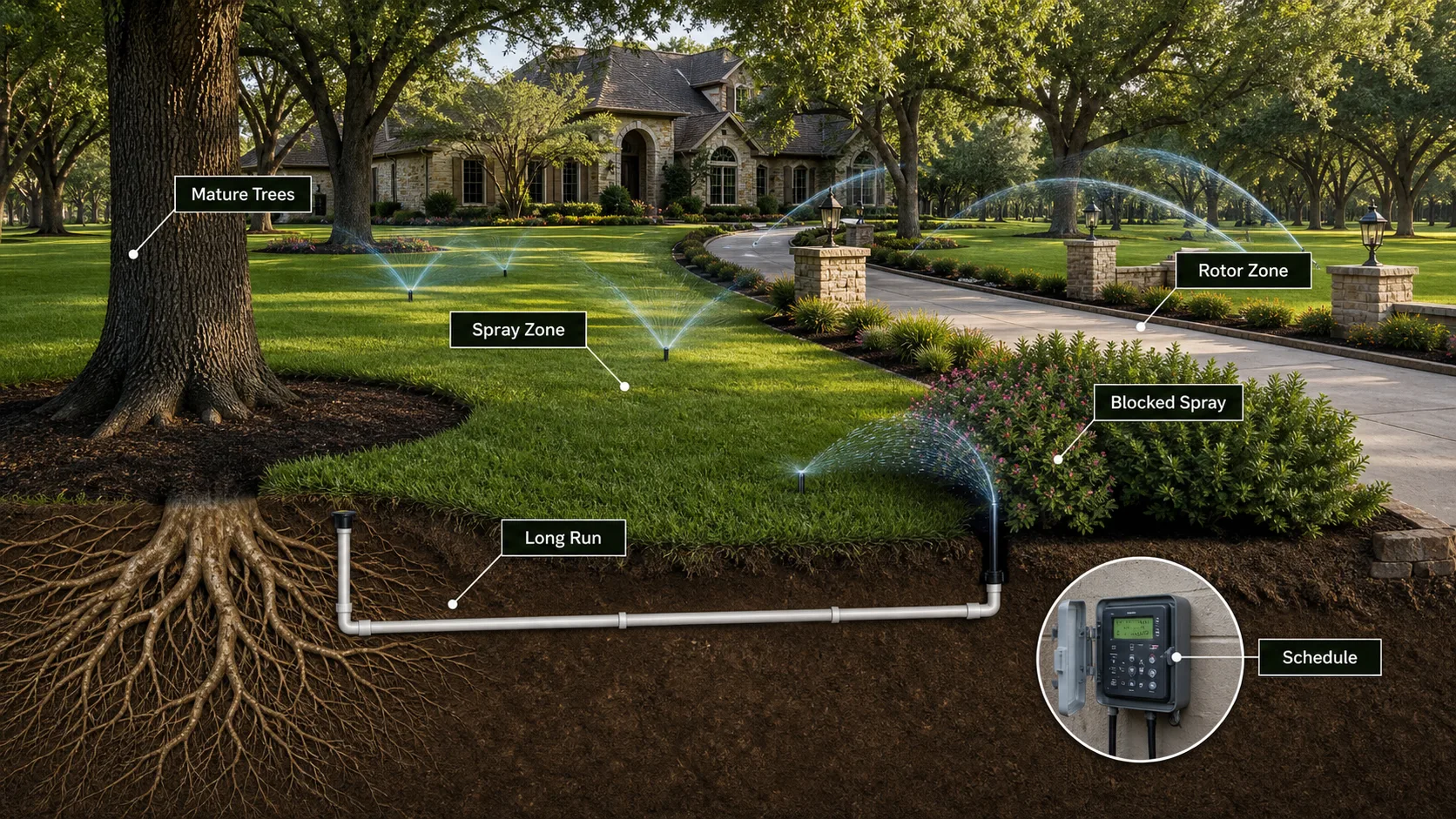
Many Pecan Plantation homes have more irrigation complexity than a small city lot. A front lawn may use rotors for long throws, while beds near the house may use fixed spray heads or drip irrigation. Mature trees can shade turf, roots can crowd buried lines, and shrubs can block spray that once reached open grass. When a homeowner sees a dry spot, the repair question is not only whether one head is broken. The better question is whether the zone still matches the landscape as it exists today.
Long runs matter because friction loss and small leaks can reduce pressure before water reaches the end of the zone. A head close to the valve may spray normally while the farthest head barely rises. That can look like a bad head, but it can also point to a hidden lateral leak, too many heads on the zone, a partially opening valve, or a nozzle mismatch. A useful inspection compares the strong and weak parts of the same zone instead of treating every dry patch as a separate problem.
Mature trees create another common challenge. Roots can shift pipe, lift heads, pinch lines, or create uneven soil around risers. The shade under large trees also changes watering needs. Grass under shade may need less water than grass in full sun, while nearby exposed turf may need more. If the controller runs the same schedule everywhere, one area can stay wet while another burns out. Repairs should consider both the mechanical failure and the watering pattern.
Blocked spray is common around established beds. A shrub that was small when the system was installed can grow into the path of a head. The head may still work, but the water hits leaves instead of turf. That creates dry edges, overspray, and wasted water. Sometimes the solution is a nozzle change or head adjustment. Other times a head needs to be raised, moved, or converted to a different spray pattern.
Before requesting help, Pecan Plantation homeowners should note whether the issue is on a rotor zone, spray zone, or bed zone if they can tell. They should also mention recent landscaping, tree work, fence work, driveway work, or utility digging. Those clues help a technician decide whether to start with the head, valve, line, controller, or pressure check.
Controller schedules deserve extra attention on larger properties. A lawn can have one program for turf, another for beds, and another for drip or specialty areas. If start times are stacked incorrectly, the system may run more than intended. If seasonal adjustment is too low during heat, the far edges of the lawn can decline quickly. Good repair work often includes confirming that the mechanical fix matches the run time and zone type.
Water near driveways and sidewalks should not be ignored. Overspray can come from a tilted head, wrong nozzle, or rotor that has drifted out of adjustment. In a neighborhood with larger lots and long landscaped edges, a small arc problem can waste a lot of water over a season. A coverage check should look for both dry turf and water landing where it should not.
A mature landscape also changes access. Valve boxes may be hidden under mulch, shrubs, or groundcover. Heads can be buried by thatch or soil buildup. Roots can make repairs tighter and slower. Letting the repair person know where boxes and controllers are located can reduce diagnosis time and avoid unnecessary digging.
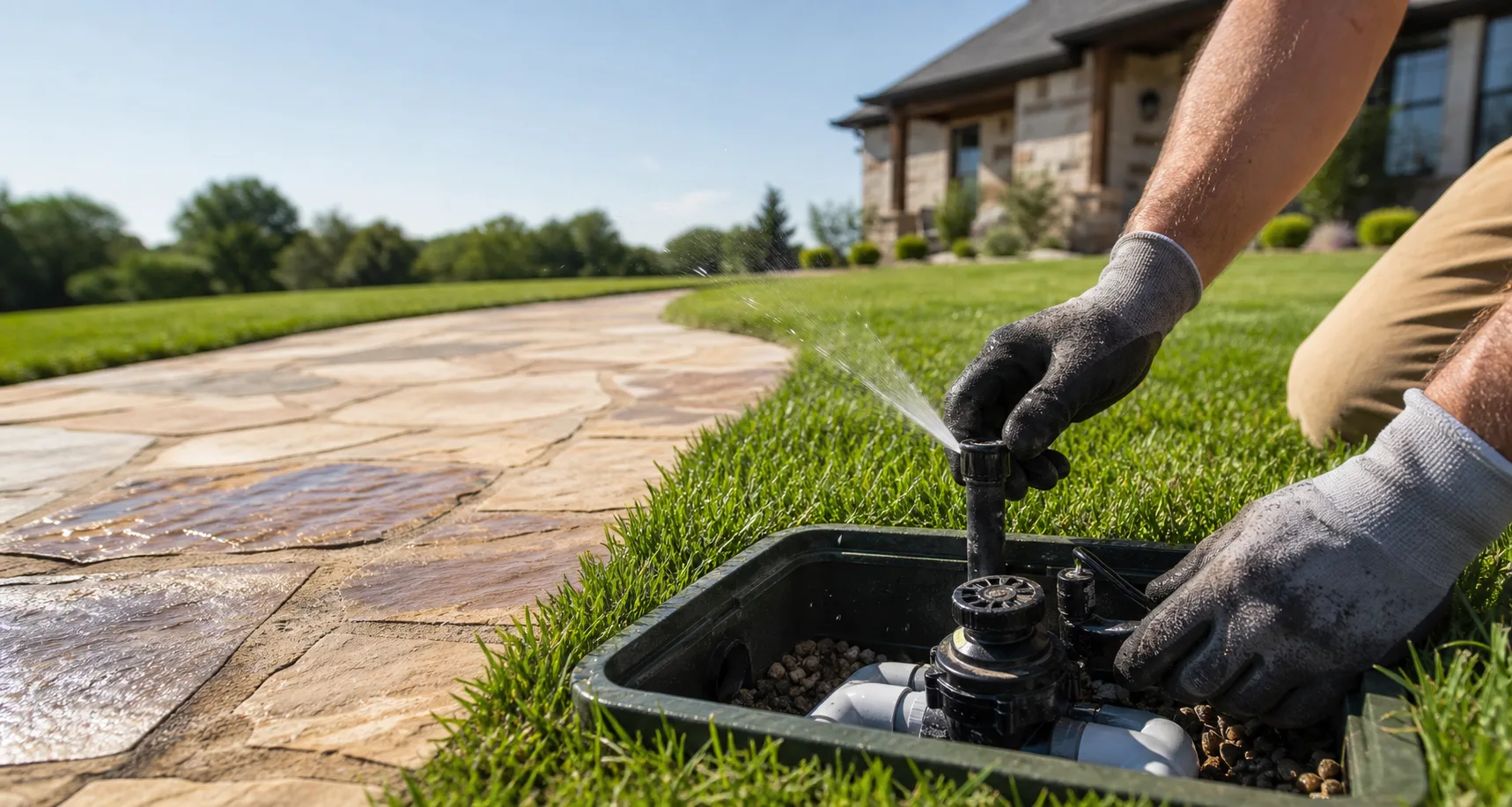
A good repair visit should watch the affected zone run, check coverage overlap, look for soggy spots near valve boxes or low heads, and verify that the controller schedule fits the season. The goal is not simply to make water appear. The goal is to restore even coverage without soaking sidewalks, beds, tree trunks, or shaded turf that does not need the same run time.