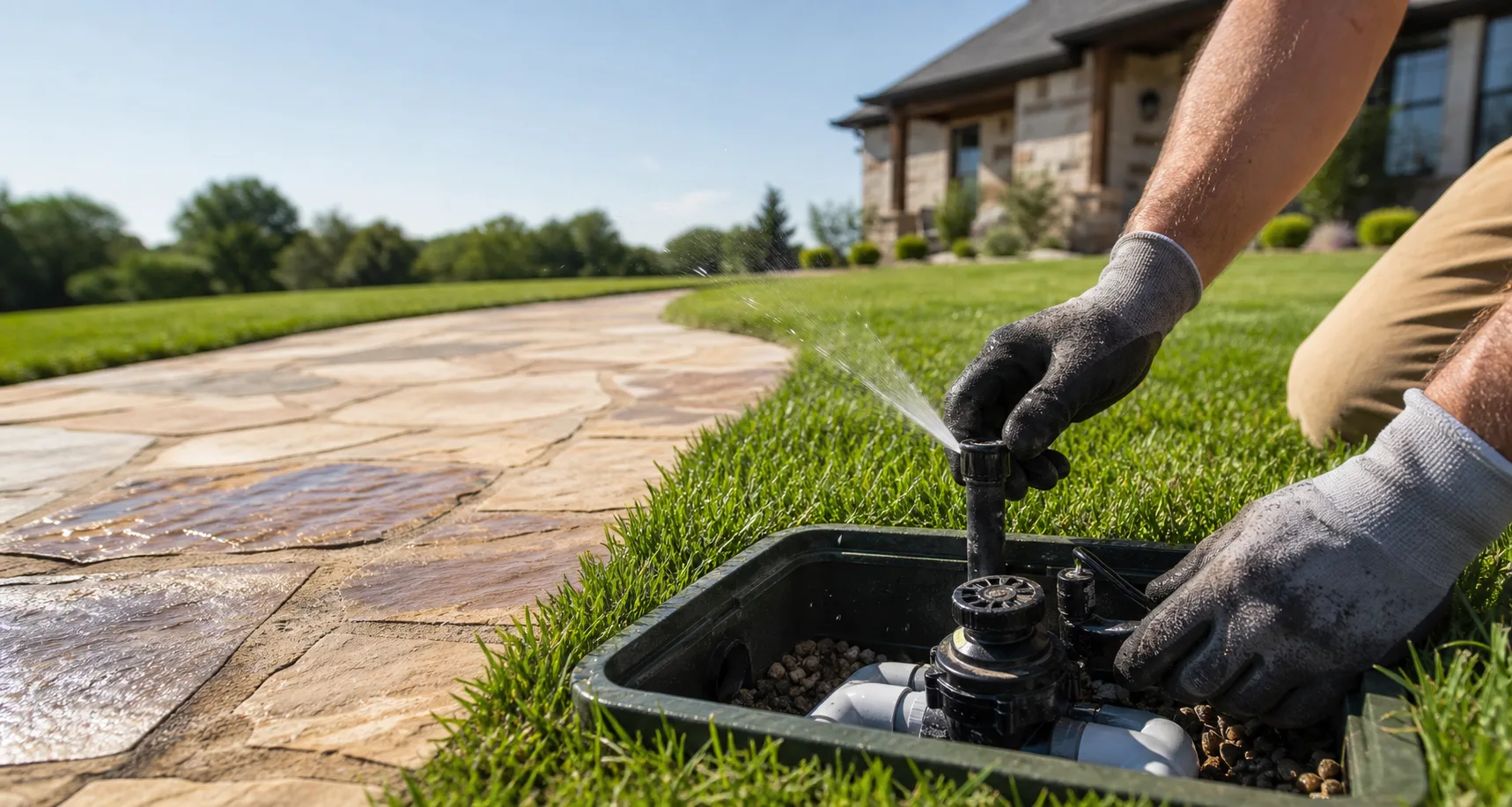
The controller tells the irrigation system when to run and which zone to open. If it loses power, has a bad transformer, or has loose wiring, the yard may not water at all. If it is programmed incorrectly, the system may run too often, skip zones, or start at strange times. A homeowner may see dry turf or high water use, but the source can be a small setting inside the timer.
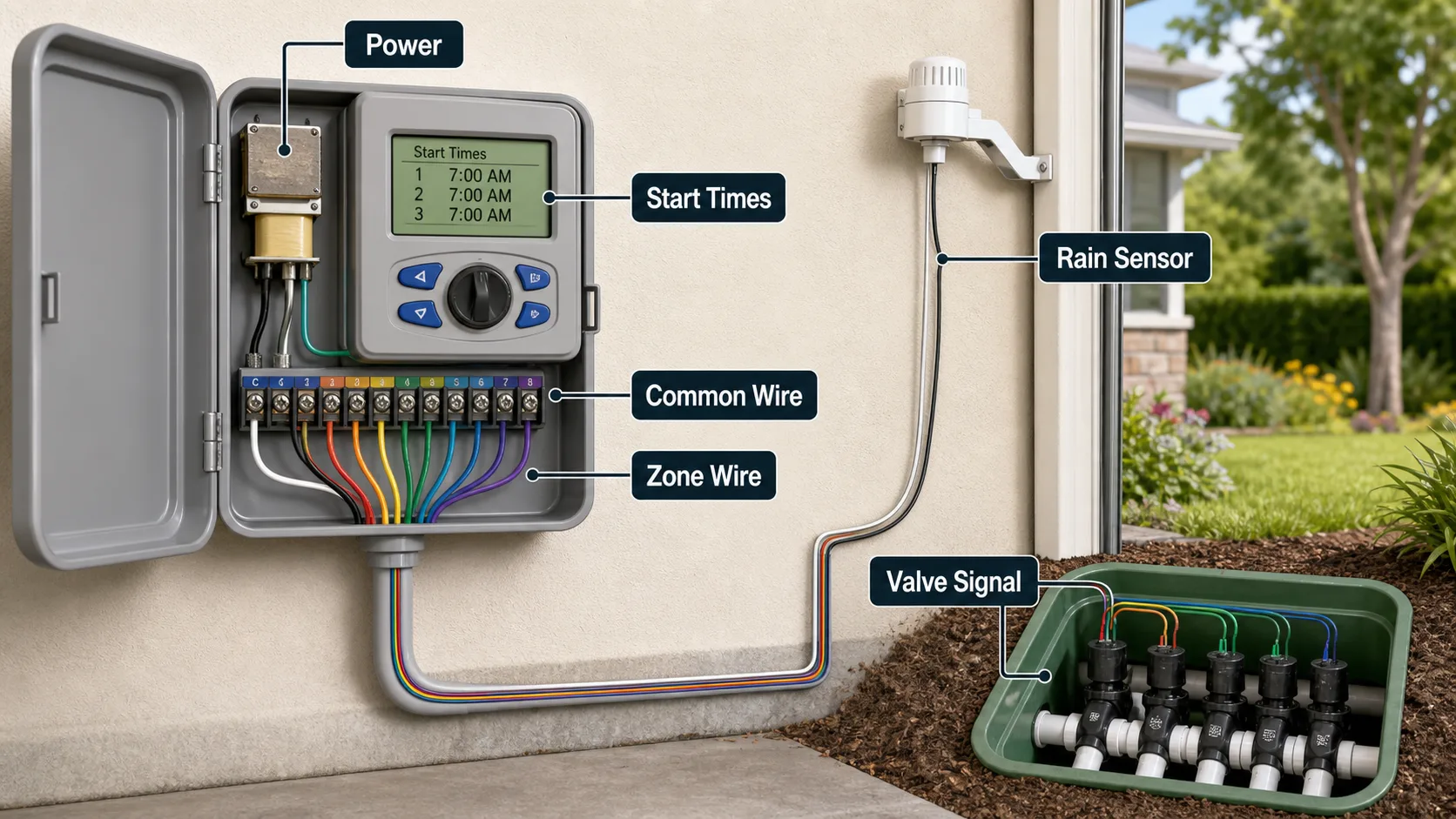
Duplicate start times are one of the most common programming issues. On many controllers, each start time runs the full program. If three start times are set for the same morning, every programmed zone may run three times. This can look like a stuck system even though the controller is simply doing what it was told.
Rain sensors and weather sensors can also confuse diagnosis. A sensor may interrupt watering after rain, but a failed or miswired sensor can keep the system off. Some controllers have bypass settings. Others require checking sensor terminals or wiring. If the display looks normal but no zones run, sensor status is one of the first things to check.
Station wiring connects the controller to each valve. A common wire usually serves multiple valves, while individual station wires activate specific zones. A cut common wire can stop several zones. A bad station wire may affect only one zone. Corroded splices in valve boxes can create intermittent problems that show up after irrigation or rain.
Controller repair should include both programming and electrical testing. A technician may confirm transformer output, check fuse or terminal condition, test voltage at the station, inspect common wire connections, verify the rain sensor, and then watch whether the valve responds. If the controller sends a signal but the valve does not open, the problem moves outside to the solenoid, wiring, or valve.
Smart controllers add another layer. Wi-Fi settings, weather adjustment, seasonal percentages, and app schedules can all affect run times. They can save water when set correctly, but they can also hide extra programs or seasonal reductions. Good controller repair leaves the homeowner with a schedule that matches the lawn, the season, and the actual zones installed.
A controller replacement is not always necessary. Many problems can be solved by correcting start times, replacing a transformer, repairing a wire connection, bypassing or replacing a failed sensor, or reprogramming zones. Replacement makes more sense when the controller is damaged, unreliable, outdated, or missing features the homeowner actually needs.
Zone labels are worth cleaning up during controller work. If the controller says "Zone 1" but nobody knows which part of the yard that means, future troubleshooting takes longer. A repair visit can identify each zone and leave clear labels for front lawn, back lawn, beds, side yard, or other areas.
Homeowners should mention power outages, recent electrical work, lightning, fence installation, landscaping, or any digging near valve boxes. Controller problems often appear after something changes nearby. Those clues can point directly to a damaged wire, tripped outlet, or sensor issue.