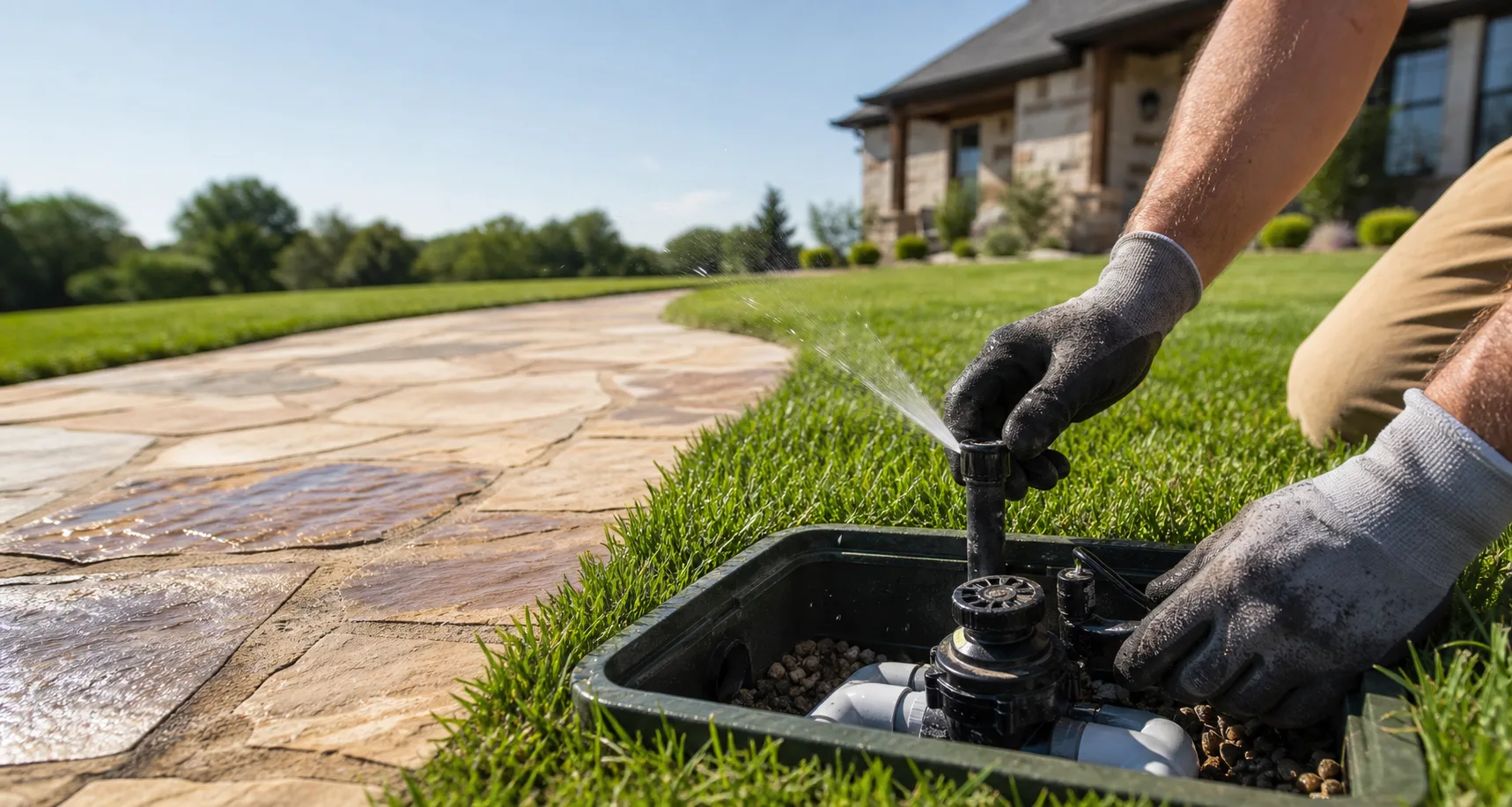
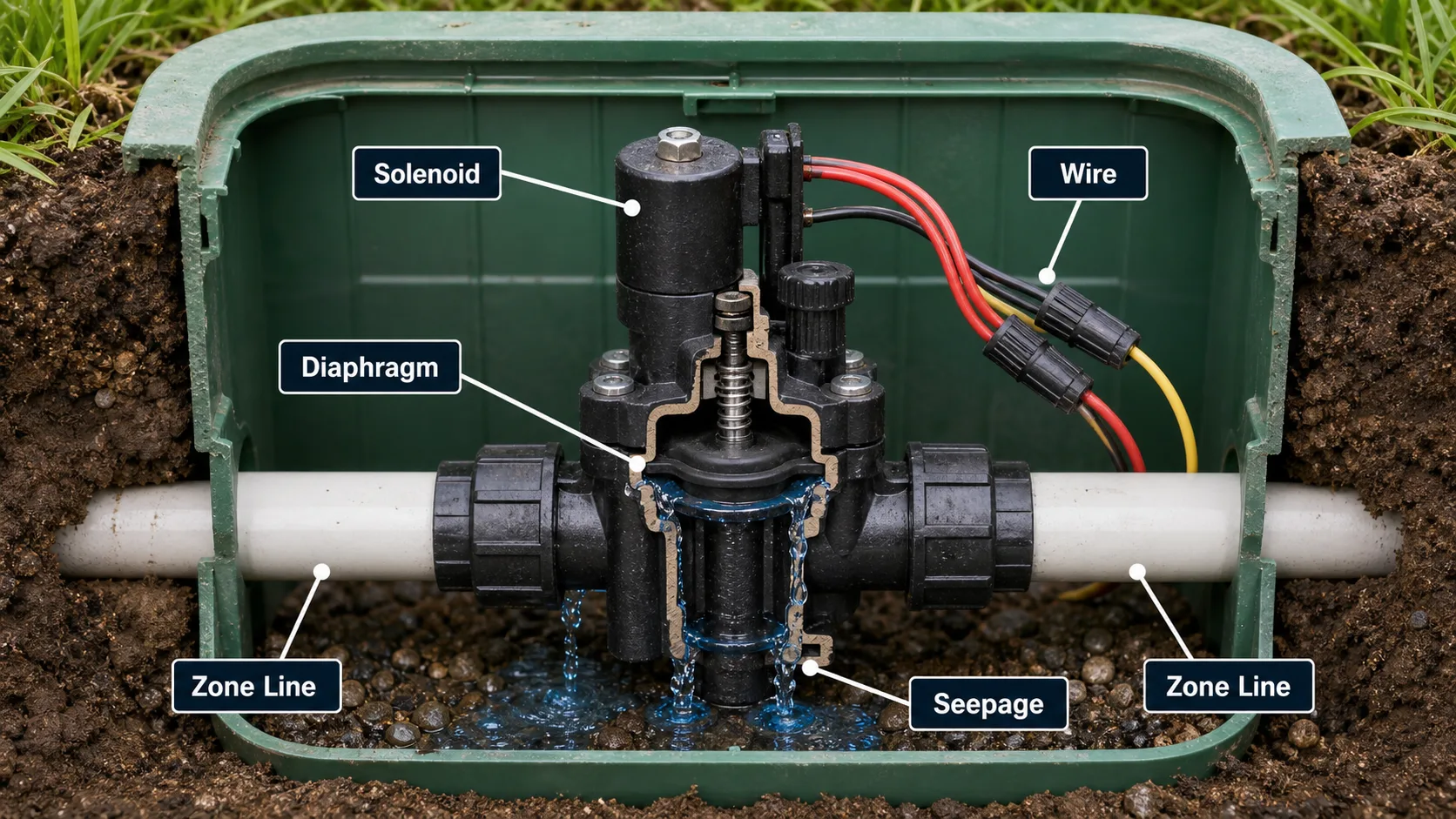
Each sprinkler zone normally has a valve in a buried valve box. The controller sends low voltage to the solenoid, the solenoid helps the valve open, and water moves into the zone. When the signal stops, the valve should close and hold back pressure. If any part of that sequence fails, the homeowner sees the symptom somewhere in the yard.
A zone that will not turn on may have a bad solenoid, broken common wire, loose splice, failed station output, or valve internals that are stuck closed. A zone that turns on manually at the valve but not from the controller often points to an electrical issue. A zone that will not turn on either way may have a mechanical valve problem or a water supply issue.
A zone that will not shut off is more urgent. The valve may have debris inside, a damaged diaphragm, a stuck bleed screw, wiring confusion, or a controller output that is still sending power. If water is running continuously, shutting off the irrigation supply can reduce waste until repair help arrives.
Slow leakage can be harder to notice. A leaking valve may allow water to seep into the zone after the system is off. The lowest head in that zone may dribble, or the valve box may stay damp. Homeowners sometimes replace the low head repeatedly, but the actual problem is upstream at the valve.
Valve boxes also tell a story. A box full of water can mean a valve leak, cracked fitting, nearby line leak, or poor drainage. Muddy water around wire connectors can cause unreliable operation. Old wire nuts or unsealed splices may work in dry weather and fail after rain or irrigation cycles.
Sometimes a valve problem is confused with a controller problem. If the controller sends power but the zone does not open, the issue may be in the wire path, solenoid, or valve body. If the valve opens manually but not electrically, that narrows the search. If the zone does not open manually, the problem may be mechanical or supply related. Those distinctions keep the repair from becoming guesswork.
Valve age matters too. Older valves may have brittle parts, worn diaphragms, or screws that are difficult to remove without damage. In some cases, replacing a diaphragm or solenoid is enough. In other cases, a full valve replacement is more reliable than trying to rebuild a part that is already failing in several places.
Homeowners can help by describing whether the zone is stuck on, stuck off, weak, buzzing, seeping, or inconsistent. They should also mention whether the valve box is full of water, whether the controller shows an error, and whether the issue affects one zone or several. Those details point the technician toward the right test sequence.
A proper sprinkler valve repair should identify whether the issue is electrical, mechanical, or hydraulic. The technician may test controller voltage, inspect wire connections, activate the valve manually, check the solenoid, open the valve, clean debris, replace a diaphragm, or replace the full valve when needed. The right fix depends on the failure, not just the visible wet spot.