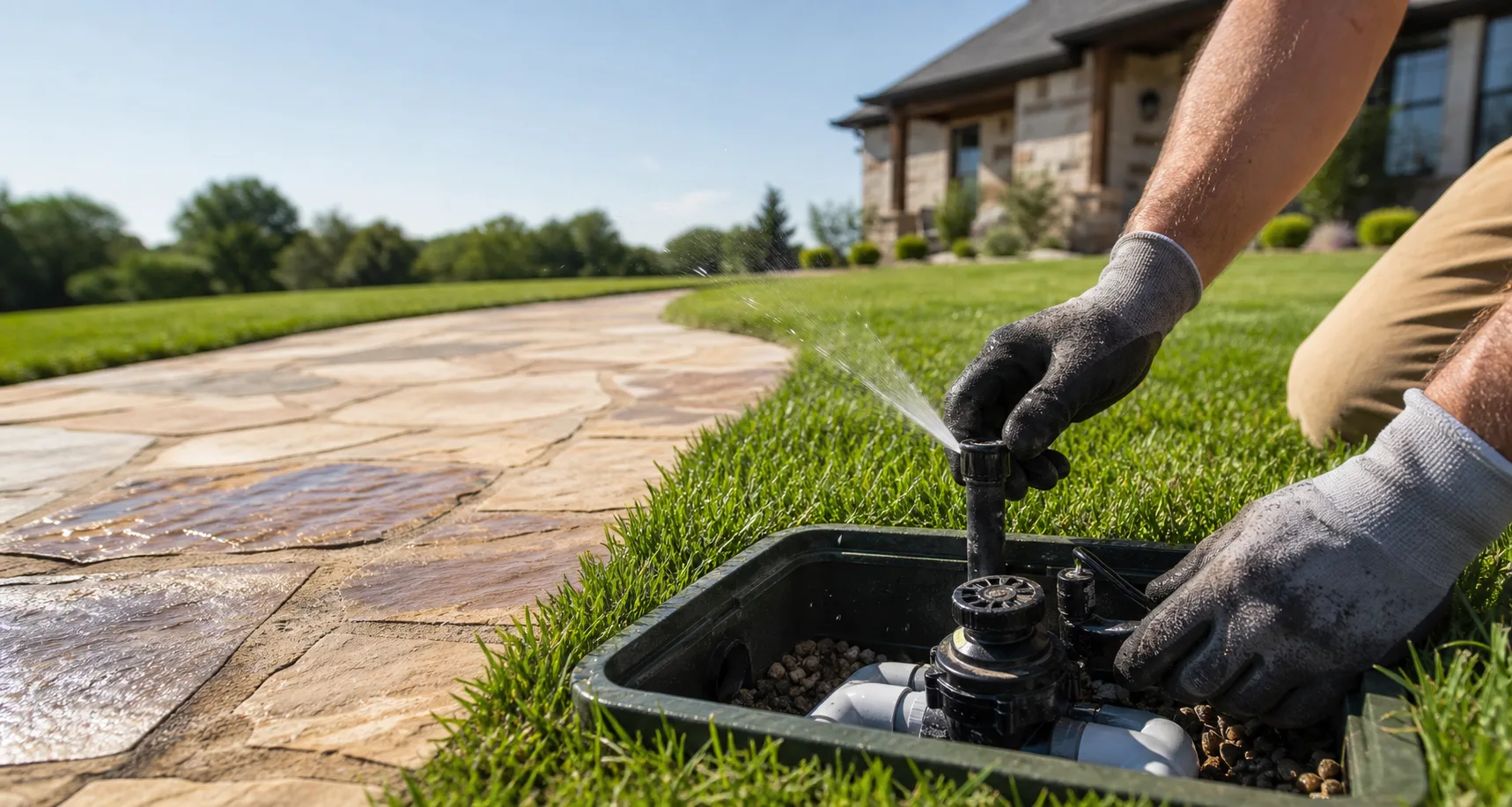
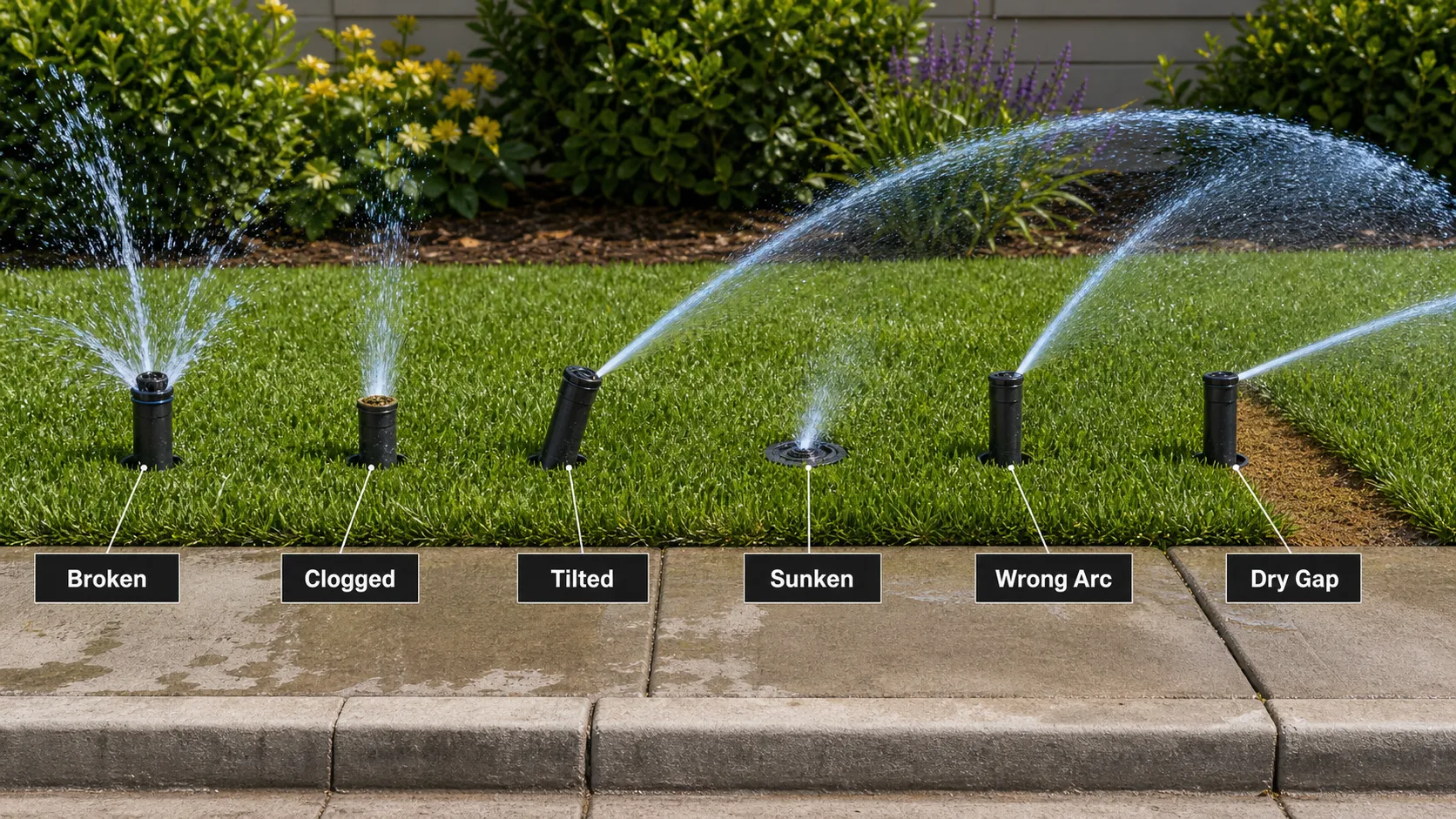
A broken sprinkler head is easy to spot when water shoots straight up or floods the sidewalk. Other head problems are quieter. A clogged nozzle may leave a fan-shaped dry patch. A tilted head may spray the driveway. A sunken head may water grass blades directly in front of it instead of reaching the intended area. A wrong nozzle or wrong arc can water too far, not far enough, or in the wrong direction.
The first decision is whether the head itself is damaged. Caps, bodies, risers, nozzles, and seals can crack or wear out. Mowers often hit heads along sidewalks and driveways. Soil can settle and lower a head below grade. If the body is cracked or the seal is failing, replacement is usually cleaner than repeated adjustment.
Clogs are common in nozzles and screens. Dirt, small debris, hard water buildup, or material from a line repair can partially block spray. The head may still pop up, but the pattern becomes uneven. Cleaning or replacing the nozzle can restore the pattern if the head body is otherwise in good shape.
Adjustment matters because sprinkler heads are designed to overlap. One head does not water a whole section by itself. It works with nearby heads to create even coverage. If one arc is turned too far, water lands on pavement. If it is turned too short, a dry edge appears. If the wrong nozzle is installed, pressure and distance can change across the entire zone.
A head problem can also reveal a pressure problem. Heads that barely rise, spray weakly, or fail at the far end of a zone may not be bad heads. They may be telling you there is a leak, valve issue, supply restriction, or too many heads on the zone. A repair person should watch the whole zone run before replacing parts blindly.
Different head types should not be mixed carelessly. Spray heads and rotors apply water at different rates. A zone with mismatched heads may leave one area dry while another gets soaked. Nozzle selection matters too: full-circle, half-circle, quarter-circle, strip nozzles, and specialty patterns each serve a different layout.
Height is another practical issue. A head that sits too low may be blocked by grass. A head that sits too high can be hit by a mower. A tilted head can throw water over the target area. Repair may include replacing the body, adjusting the riser, straightening the head, or clearing turf around the spray path.
Sprinkler head repair is also a chance to prevent repeat damage. Heads near driveways, sidewalks, and curb edges are the most likely to be hit. If one head breaks repeatedly, the problem may be placement, soil support, or the wrong head type for that location rather than bad luck.
Homeowners can help by noting which head is failing, whether the issue happens every cycle, and whether nearby heads look weak too. A single broken head is usually a straightforward repair. A row of weak heads may need pressure or leak troubleshooting. Good sprinkler head repair restores the head and confirms the lawn is getting water where it actually needs it.