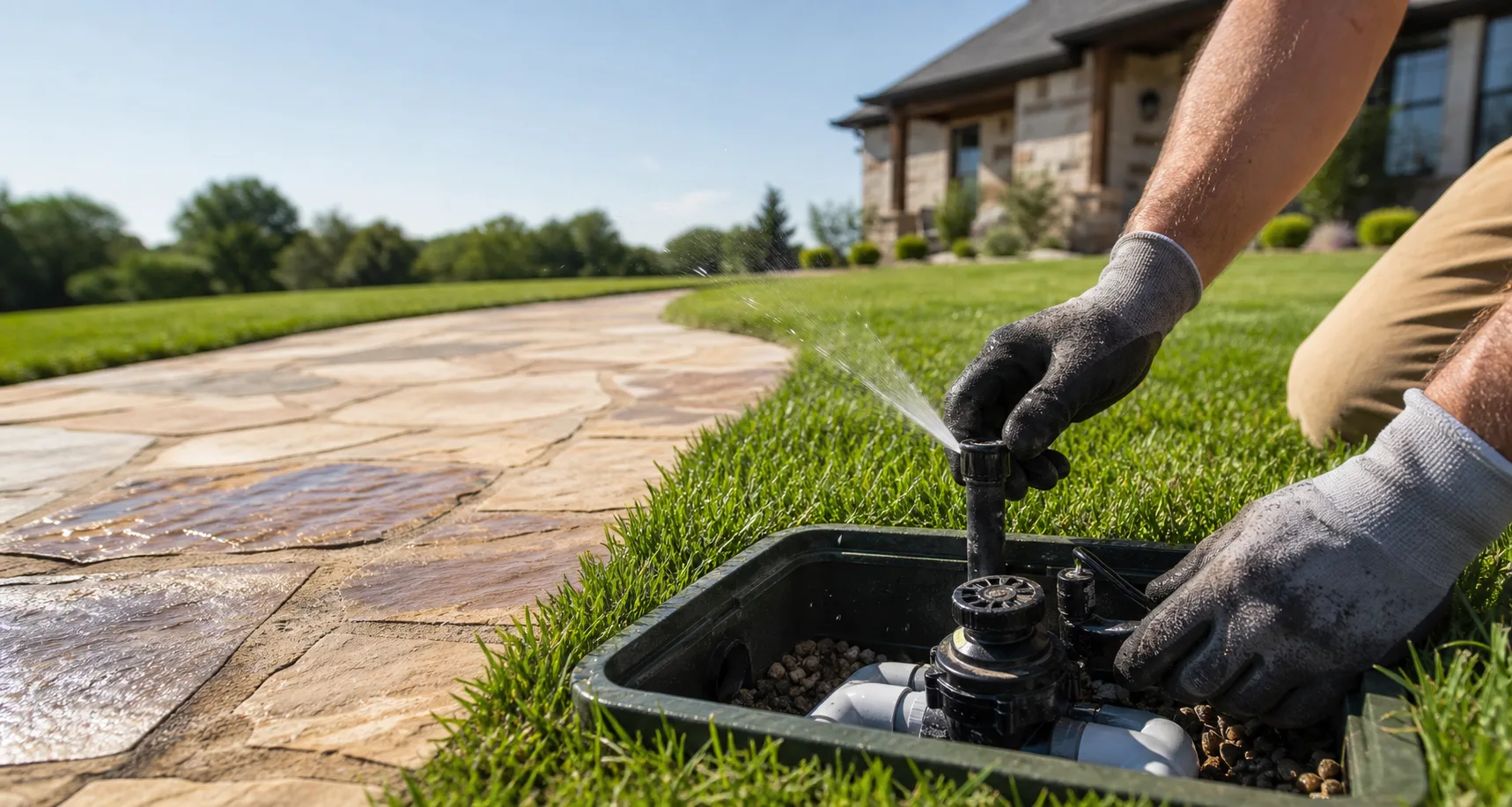
Heads near driveways and sidewalks are exposed to more damage than heads in open lawn. Tires, mower wheels, edgers, foot traffic, soil movement, and concrete edges can tilt the head or crack the riser below it. Replacing the visible cap may not fix the issue if the riser or fitting is also damaged.
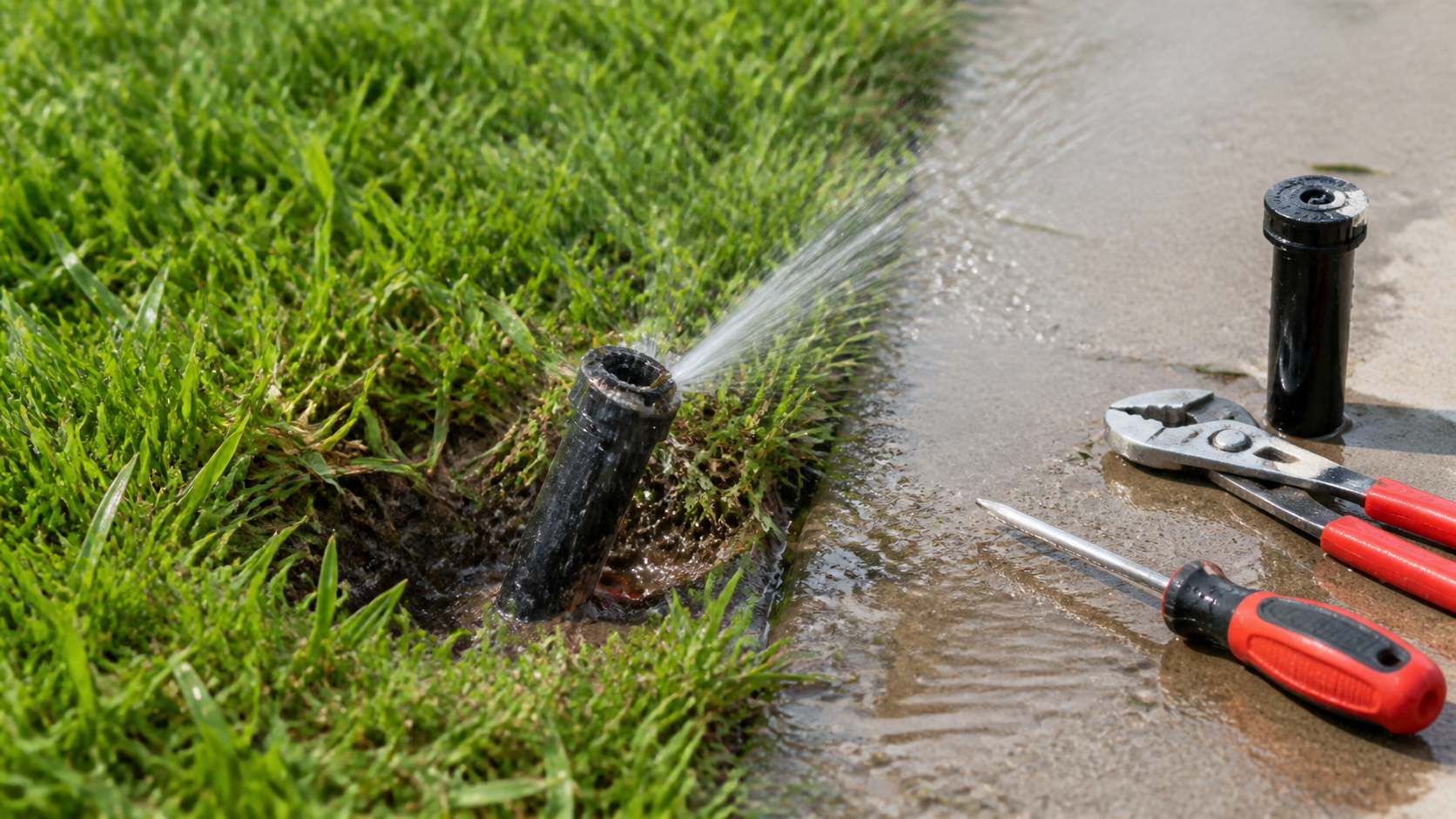
Overspray is often the first symptom. A head may still pop up and spray, but the arc has drifted toward the driveway or walkway. That wastes water and can leave the turf edge dry. The repair should check the nozzle, arc, head height, pressure, and whether the head is level.
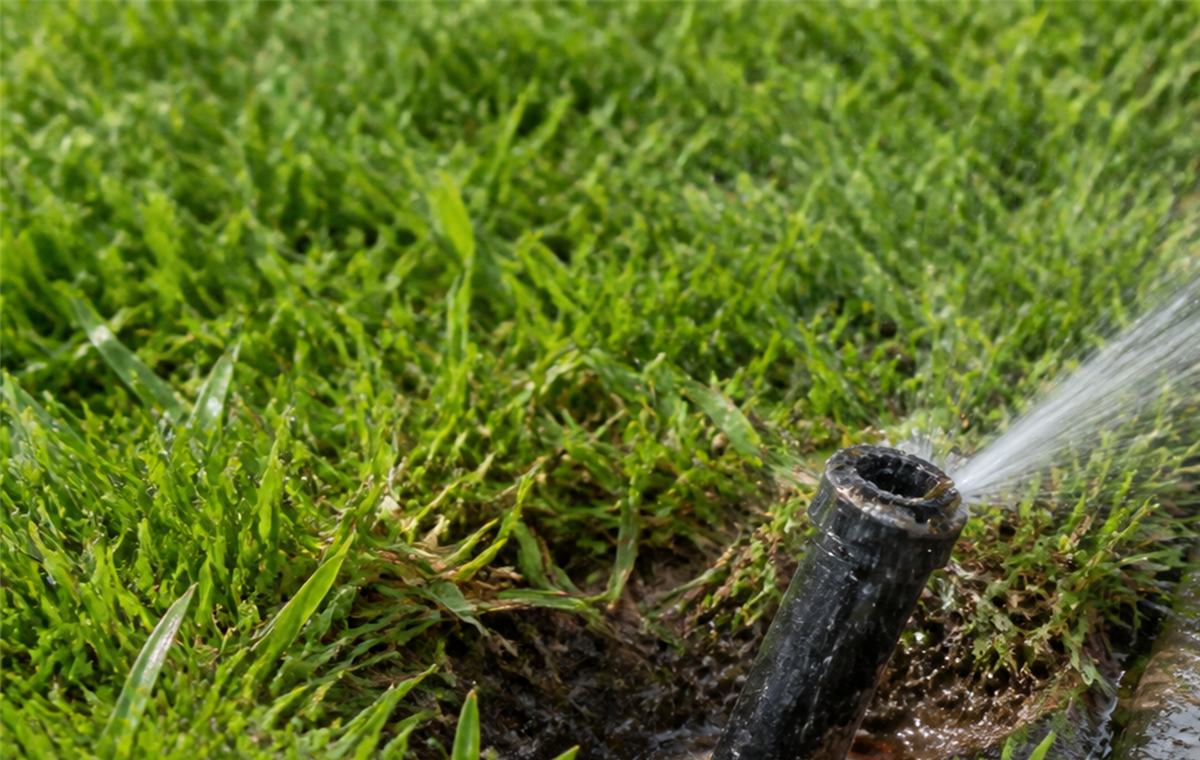
A broken riser can leak underground while the head looks mostly intact. Water may bubble around the head, sink the soil, or run along the concrete edge. The right repair exposes the connection carefully enough to confirm whether the riser, elbow, fitting, or lateral line is damaged.
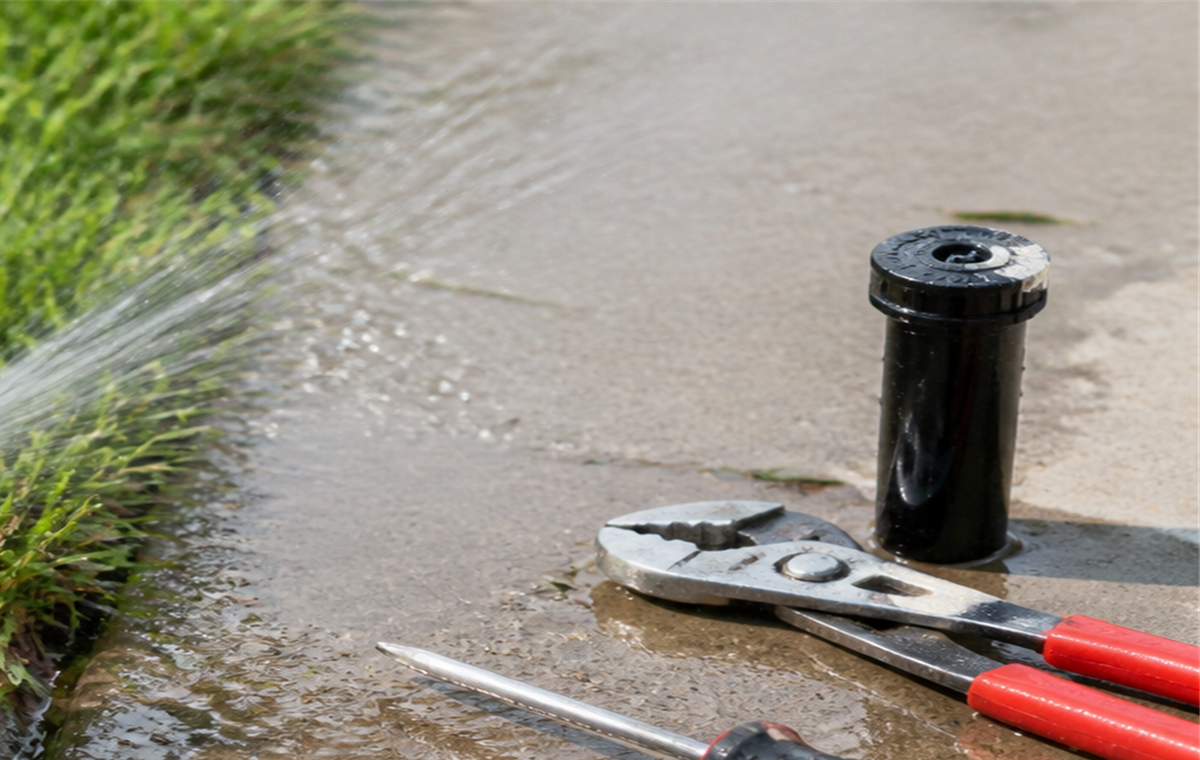
Concrete edges can hide movement. Soil may settle beside a driveway, leaving the head lower than intended. Grass can grow over the nozzle. A head that no longer clears the turf may spray into blades instead of across the lawn, creating dry strips beside the walkway.
Nozzle choice matters. The head near a sidewalk often needs a precise quarter, half, or strip pattern. A mismatched nozzle can throw too far, mist under high pressure, or leave a gap that looks like a watering shortage. Good repair work matches the nozzle to the space.
Homeowners should note whether the head leaks only while running, seeps after shutoff, or sprays constantly. They should also mention whether the damage appeared after mowing, edging, vehicle traffic, construction, or yard work.
The final test should watch the zone run. The repaired head should rise, spray the correct arc, overlap with nearby heads, avoid hardscape, and retract or seal properly when the zone shuts off.