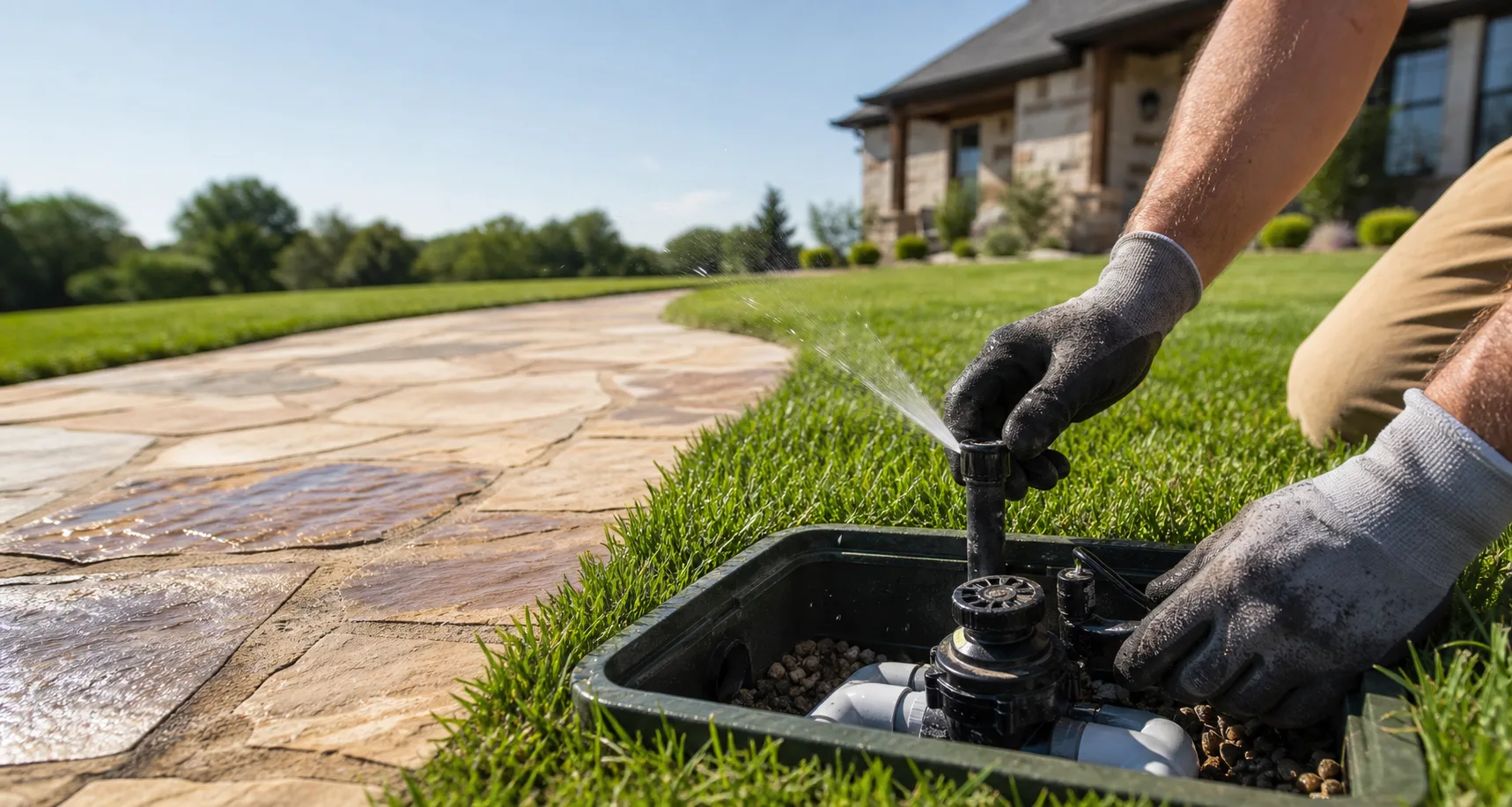
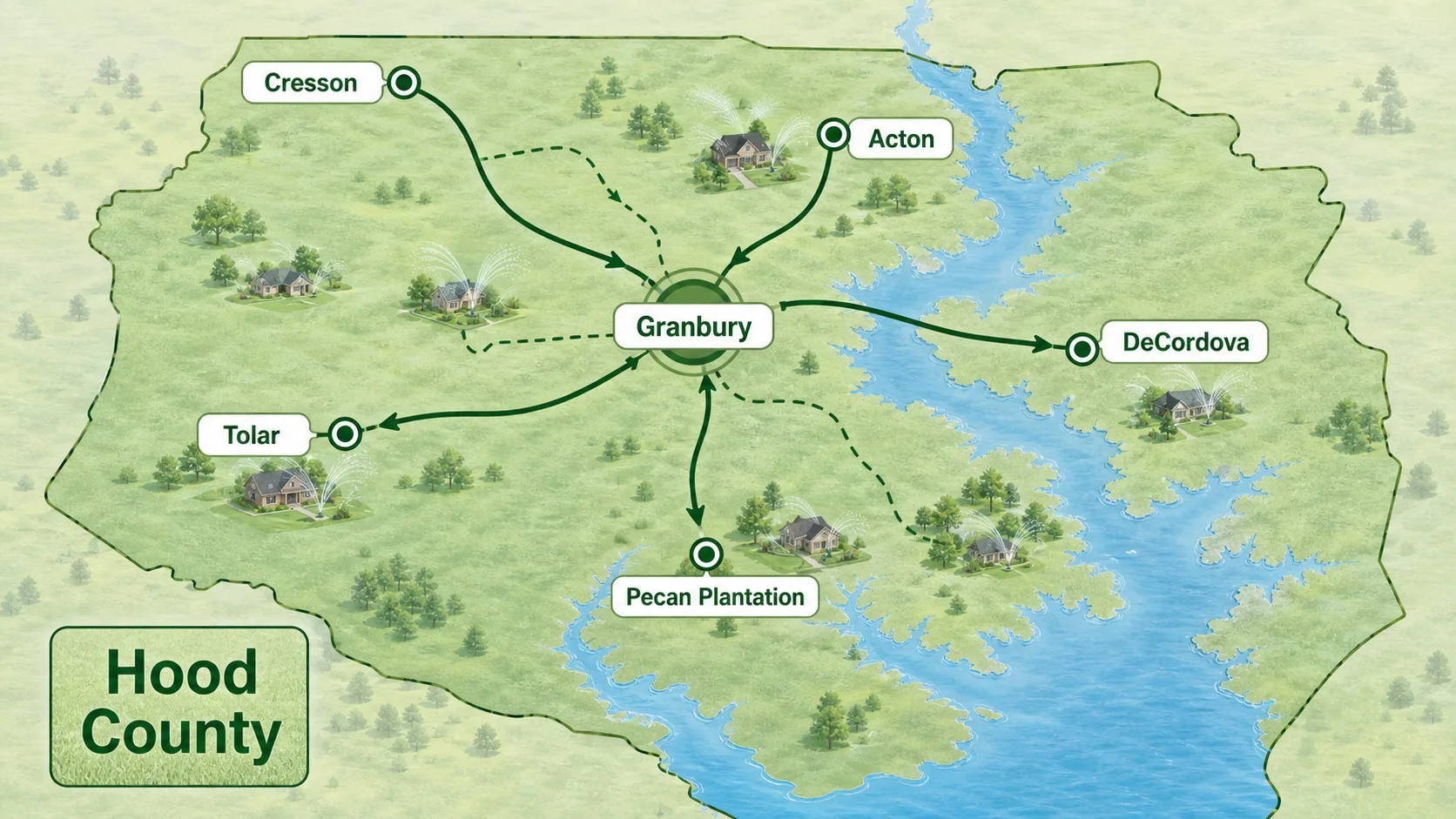
Sprinkler repair near Lake Granbury can involve more than a broken head. Slopes, retaining walls, lake-facing yards, tree cover, and established landscaping change how water moves after it leaves the sprinkler head. A zone may be technically running while the water lands in the wrong place or runs off before soaking into the root zone.
Runoff is a common clue. If water moves quickly toward a driveway, sidewalk, retaining edge, or low area, the issue may be run time, head angle, nozzle type, pressure, or soil intake rate. Adding more minutes may make the problem worse. A repair or adjustment should consider shorter cycle times, better head alignment, or different nozzle patterns where appropriate.
Sloped lawns can make pressure differences more visible. Heads at the bottom of a run may drain after the zone shuts off, while heads at the top may struggle to rise if pressure is weak. A technician may need to check valve performance, lateral leaks, head type, and drainage behavior before deciding whether the symptom is normal low-head drainage or a repair issue.
Mature trees and beds near lake-area homes can block spray patterns. A head installed years ago may now hit shrubs, trunks, or raised beds instead of turf. The fix may be adjustment, raising a head, changing nozzles, relocating a head, or correcting the schedule for shaded zones.
Leaks near retaining walls or hardscape should be described clearly. Water can travel along compacted soil, pipe trenches, or hard edges before appearing at the surface. A wet spot at the bottom of a slope may not be directly above the break. A repair visit should trace the zone and watch the system run instead of digging only where water appears.
Controller schedules also matter around Lake Granbury. A shaded side yard may need less water than a sunny slope. A narrow strip near hardscape may need a different runtime than open turf. A smart controller can help, but only if the zones are labeled correctly and the settings match the actual landscape.
For homeowners, the most useful request includes the nearest area, whether the lot is sloped, where water is collecting, which zone is affected, and whether the issue is leak, runoff, dry turf, or overspray. Those details help route the request and reduce guesswork.