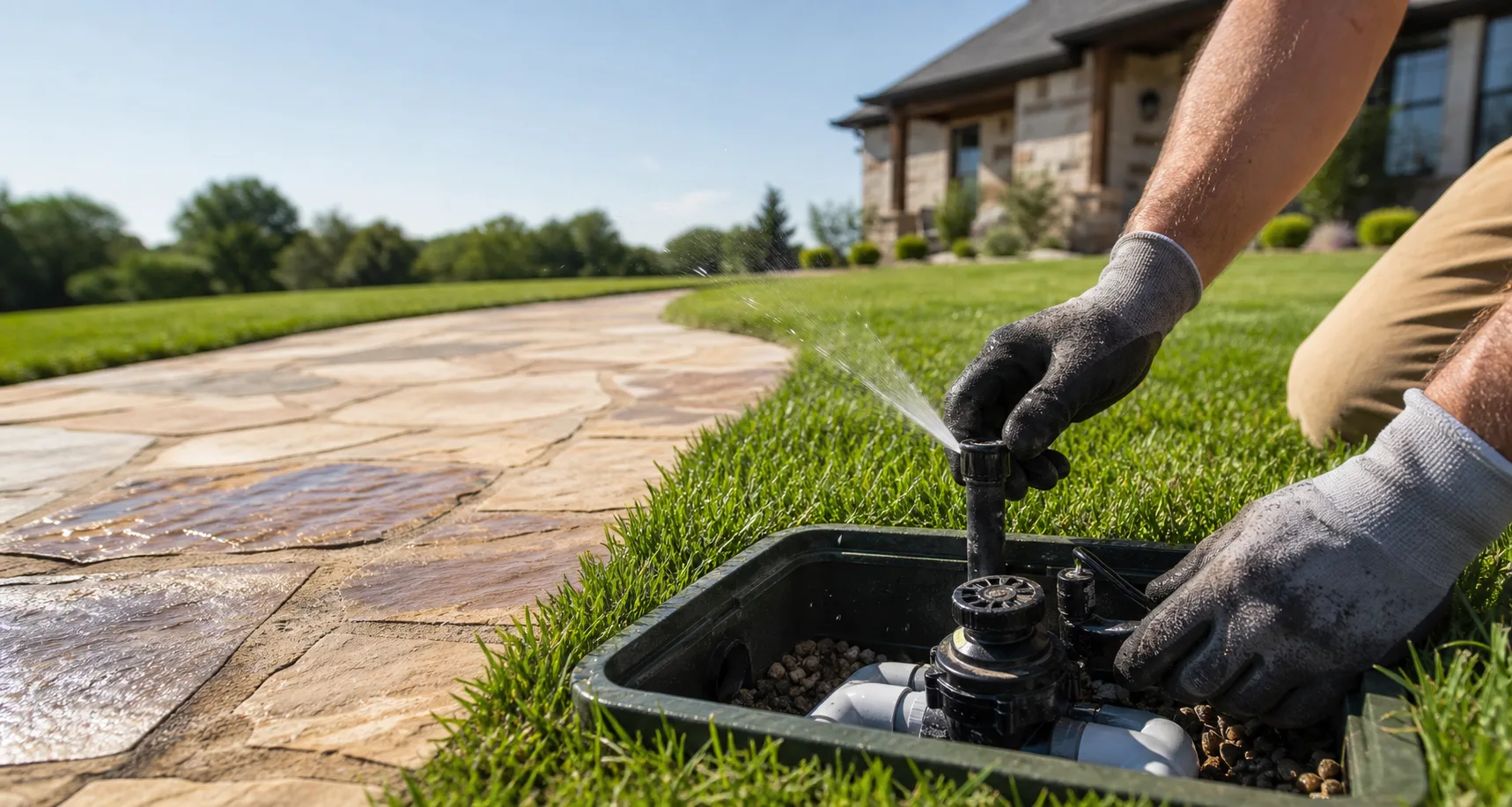
The least expensive irrigation repairs are usually the ones where the failed part is visible and easy to reach. A cracked head, clogged nozzle, tilted riser, or simple controller setting can often be checked quickly. Cost rises when the visible symptom is only a clue and the actual failure is underground, inside a valve box, or somewhere in the control wiring.
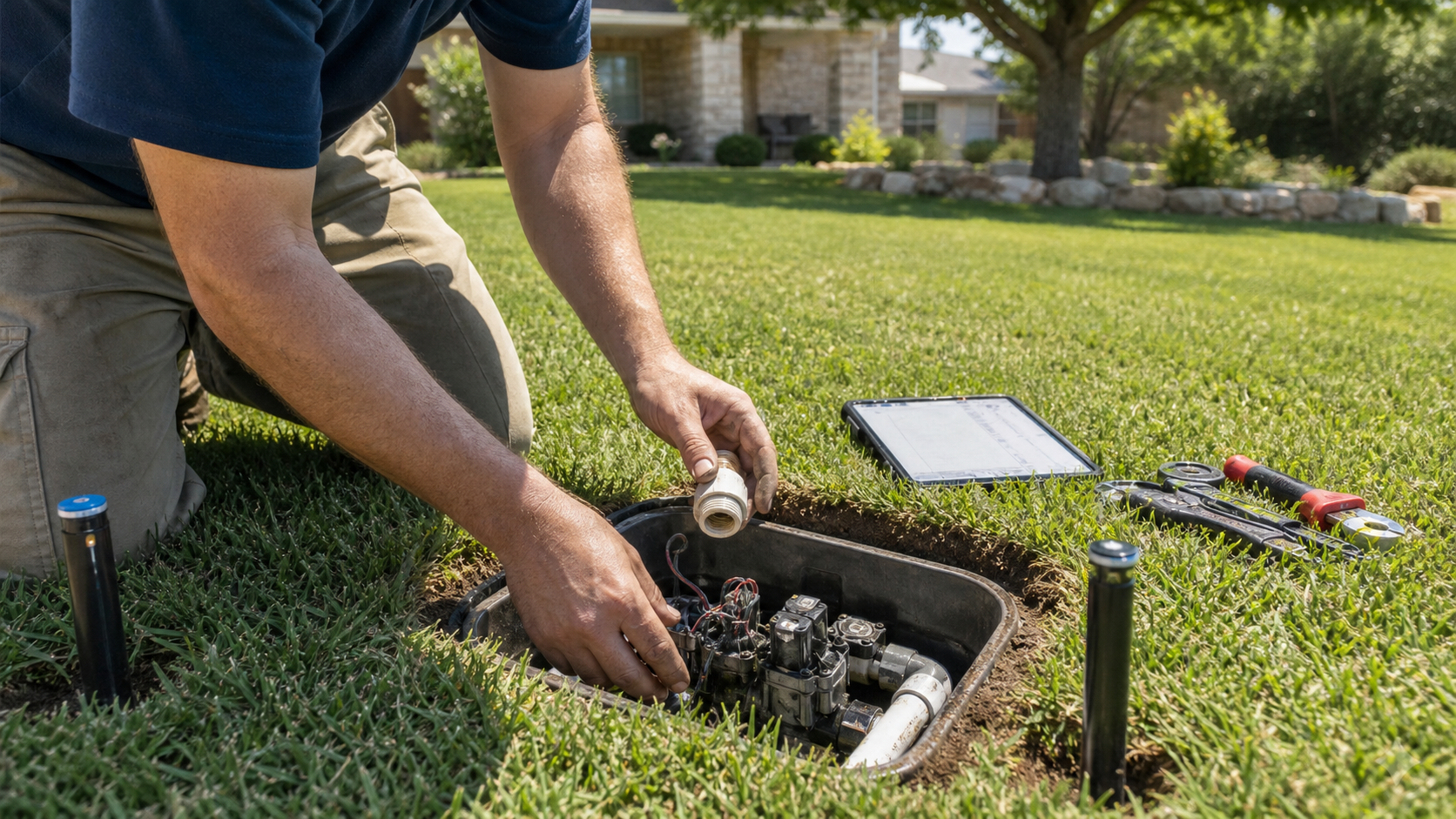
Diagnosis time matters because sprinkler systems are connected. A dry patch can be caused by a broken head, but it can also come from a valve that does not open fully, a clogged nozzle, a hidden line leak, weak pressure, or a controller station that is not firing. A good repair process avoids replacing parts at random and instead follows the zone from controller to valve to pipe to heads.
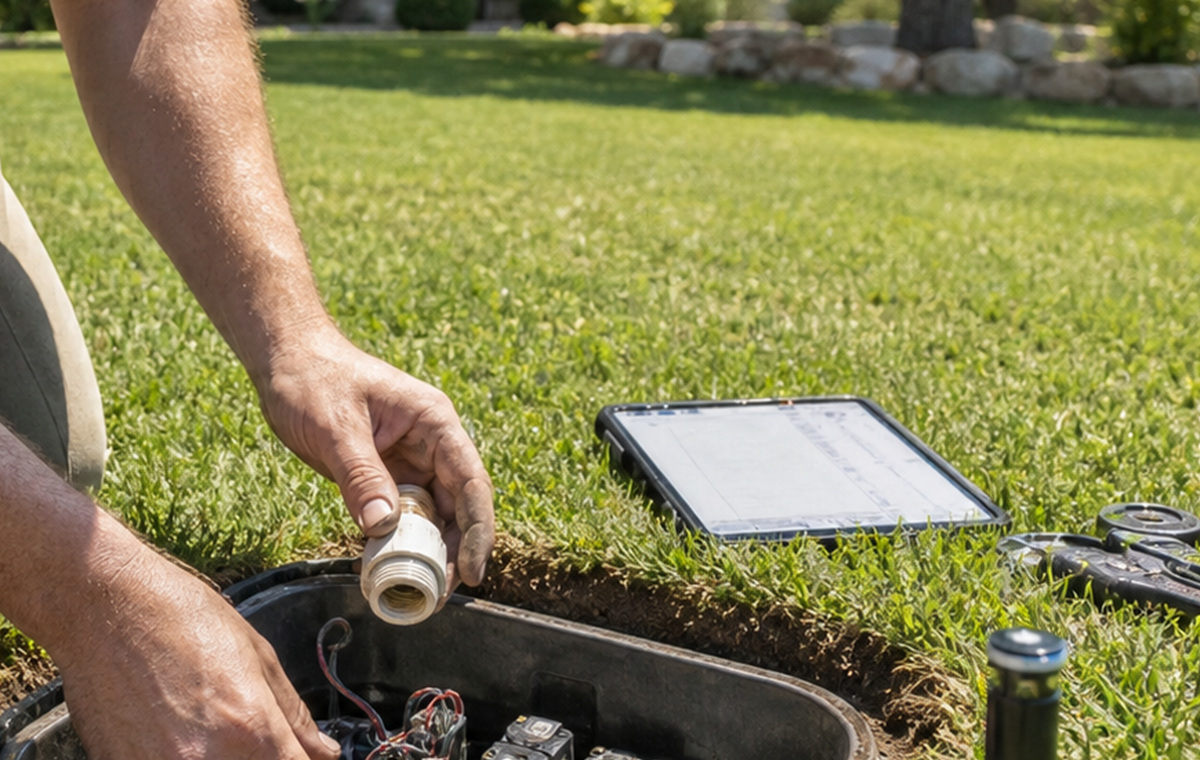
Access changes the job. A valve box that is easy to find, clean, and dry is faster to inspect than a buried or flooded box. A broken line in open turf is different from a break under a driveway edge, tree root area, landscape bed, or hardscape border. The harder it is to expose the failed part without damaging the property, the more planning the repair needs.
Parts are only one part of cost. A solenoid, diaphragm, nozzle, head, fitting, wire connector, or controller part may be modest by itself, but the job also includes finding the failure, shutting down water safely, repairing the part, testing the zone, and confirming the symptom is gone. That final test is what keeps a quick repair from becoming a repeat call.
Electrical issues can be less obvious than leaks. A bad common wire, loose splice, failed solenoid, or controller station problem may leave no wet spot to follow. A technician may need to test voltage, continuity, and valve response before deciding whether the issue is at the controller, in the wire path, or inside the valve box.
Homeowners can reduce wasted time by collecting observations before requesting help. Which zone is affected? Does the issue happen every cycle? Does water continue after the controller is off? Did the issue begin after mowing, digging, fence work, or weather? Clear notes help the repair person start in the right place.
For regulated backflow testing or repair, qualifications matter. Ordinary sprinkler repairs and backflow work are related, but they are not always handled under the same rules. If a repair touches regulated equipment or reporting, homeowners should verify that the provider is properly qualified for that task.