
Summer does not always cause sprinkler low pressure, but it reveals it quickly. A zone that was barely adequate in spring may leave dry corners once heat rises. Weak spray, heads that fail to pop up, short throw distance, or uneven coverage can all be signs that the system needs pressure and coverage checks.
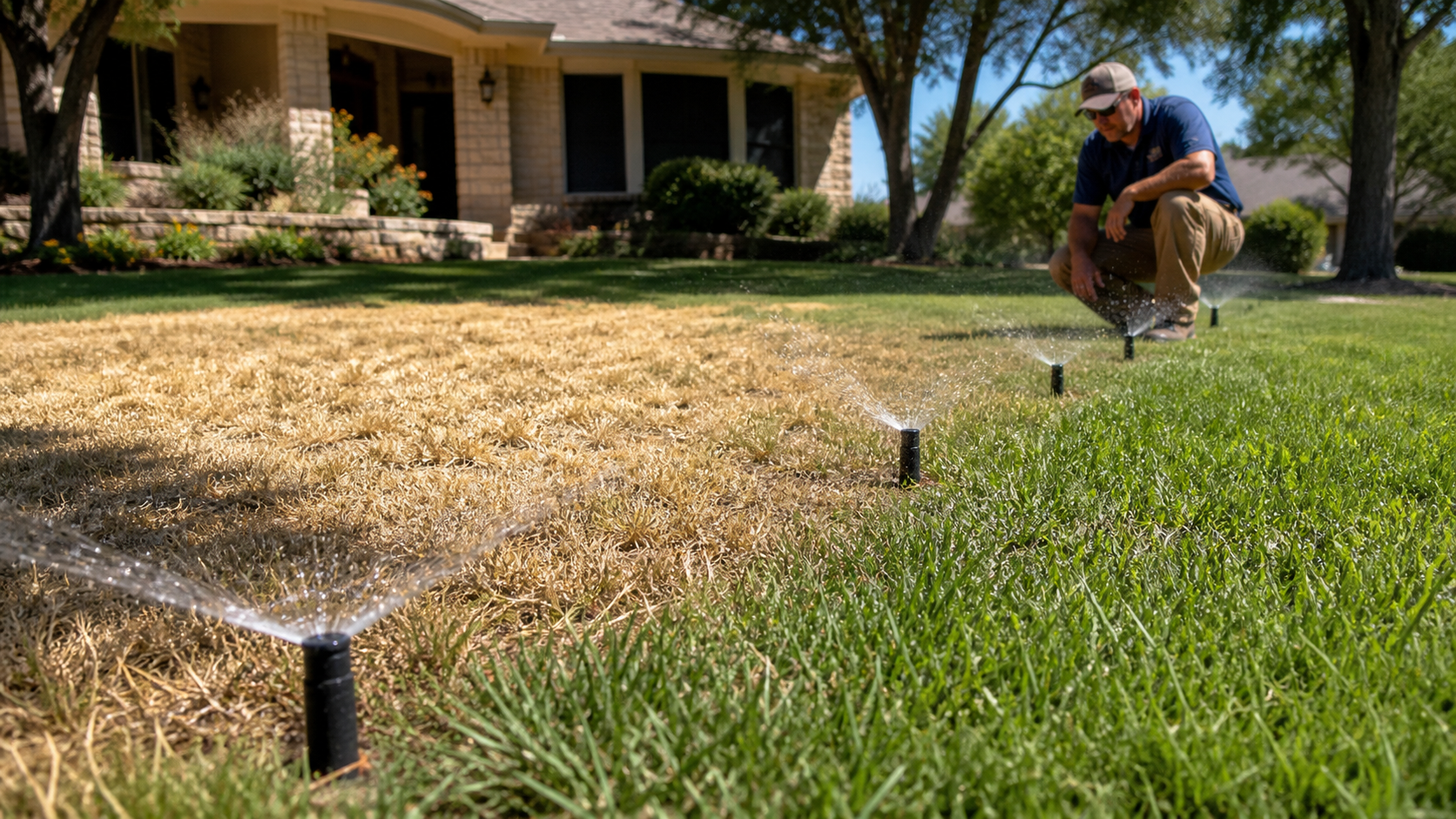
The first diagnostic split is simple: every zone or one zone. If every zone is weak, the issue may be upstream at the water supply, shutoff valve, backflow component, main line, or pressure source. If one zone is weak, the issue is more likely local to that valve, lateral line, nozzles, head count, or zone design.
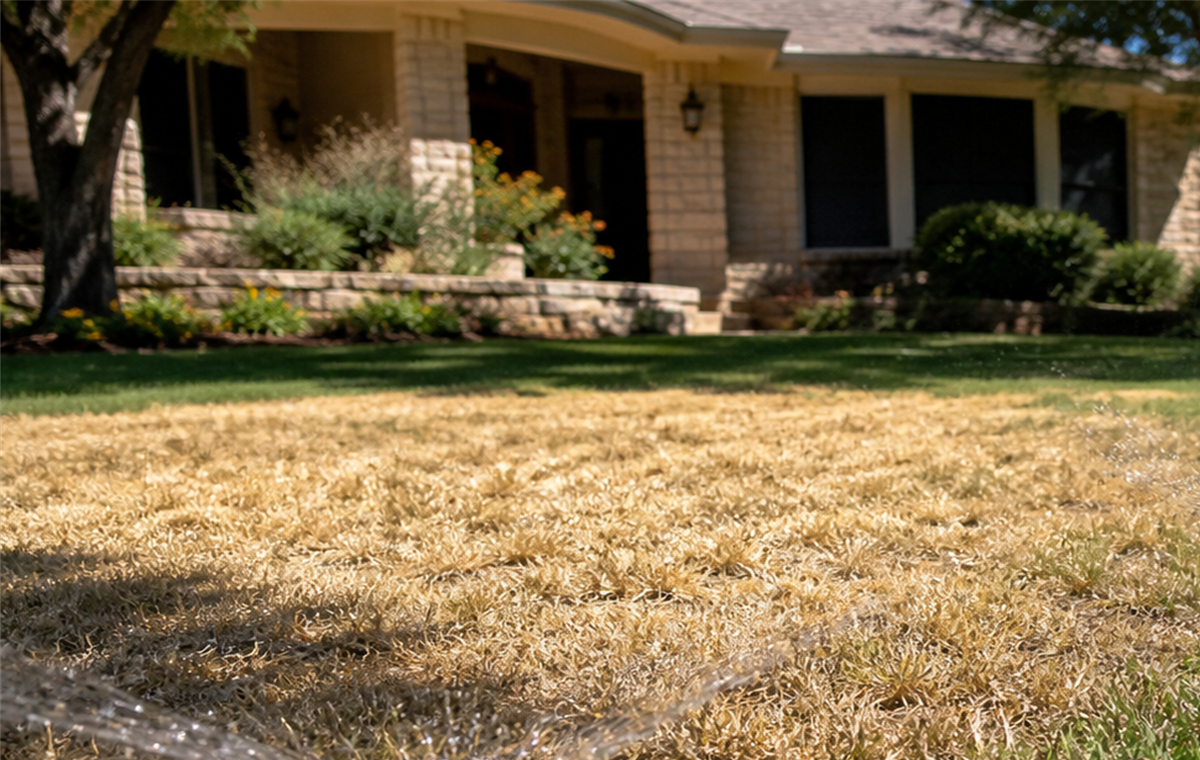
Clogged nozzles are easy to miss. A small screen or nozzle can collect debris and leave one head weak while the rest of the zone looks normal. If multiple heads are weak on the same zone, the repair person will usually look farther upstream.
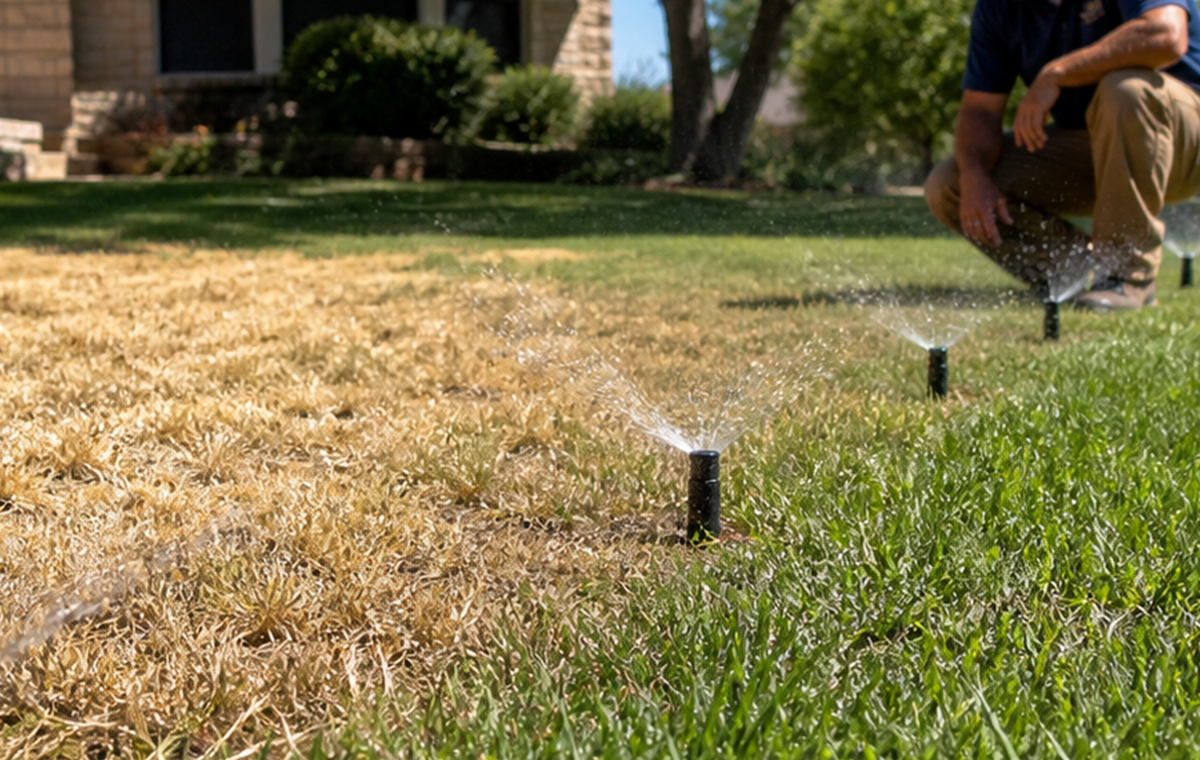
Leaks reduce pressure before water reaches the heads. A cracked riser, lateral line break, or fitting leak may create a wet spot, but in dry summer conditions the water can disappear into soil before it is obvious. Watching the zone run is often more helpful than inspecting dry ground later.
Valve restrictions can make one zone weak. A valve may not open fully because of debris, diaphragm wear, solenoid issues, or mechanical damage. The zone may run, but heads far from the valve may not rise or may spray weakly.
High pressure can also create poor coverage by turning spray into mist. In that case the yard may look under-watered even though water is being wasted into air drift or hardscape. Pressure regulation and nozzle selection matter when misting appears.
Scheduling is the final piece. A repaired zone still needs a watering schedule that fits weather, soil, sun exposure, and local rules. The mechanical repair should restore coverage, and the schedule should help the lawn use the water instead of losing it to runoff or evaporation.