
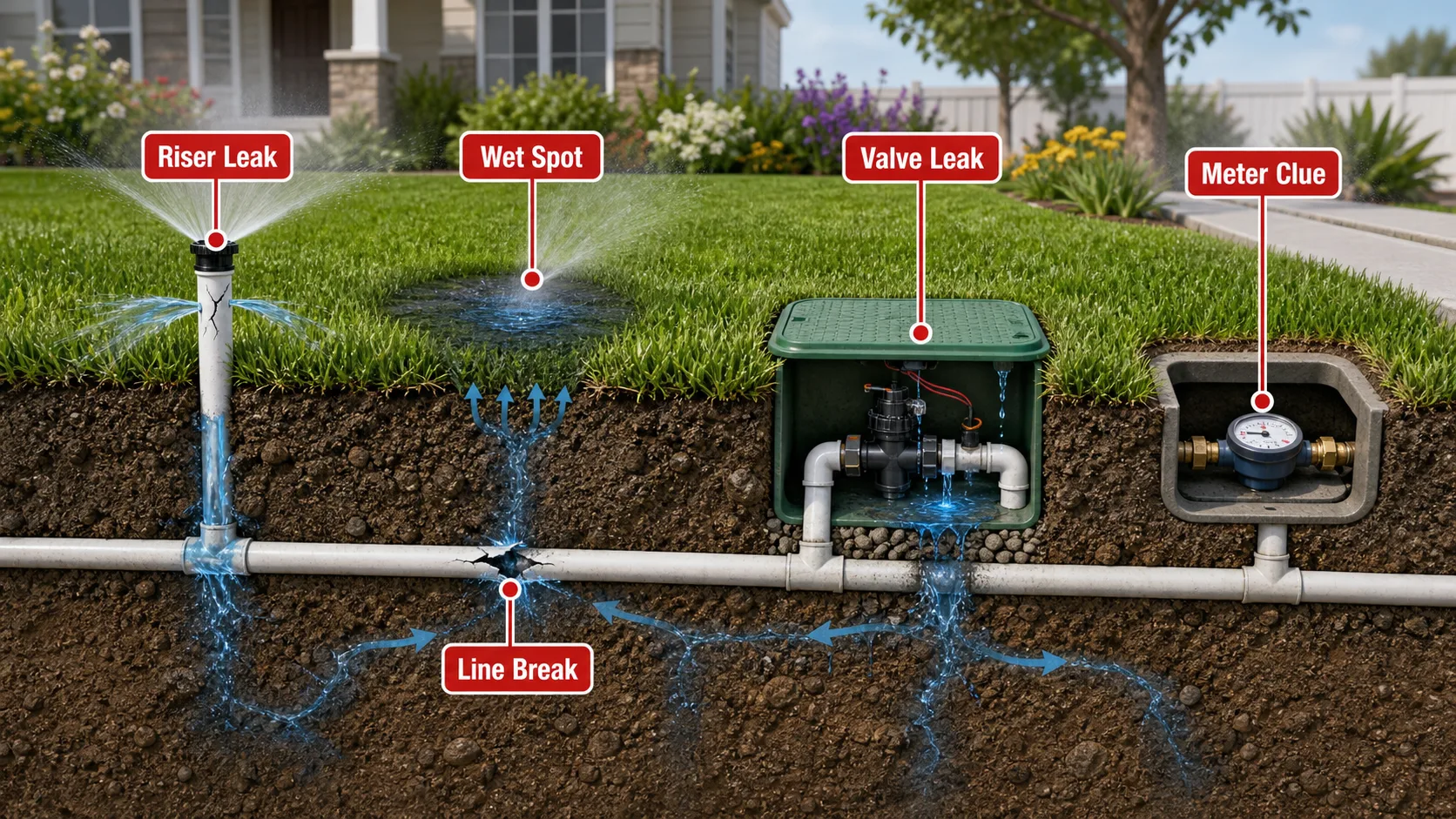
A sprinkler emergency usually starts with water that will not stop. A zone may stay on after the controller finishes, a valve may fail open, a pipe may break, or a head may snap off and flood the area around it. The first goal is to reduce water waste and prevent damage, then diagnose which part failed.
If water stops when the controller is turned off, the problem may be programming, a stuck manual run, or controller output. If water keeps running after the controller is off, the issue is more likely a valve, manual bleed setting, main line, or supply-side problem. That distinction matters before parts are replaced.
A zone that will not shut off is often valve-related. Debris inside the valve, a damaged diaphragm, a solenoid issue, or a manual bleed screw can keep water moving. The lowest head in the zone may continue to drain or seep. If the valve box is full of water, the repair person also needs to check fittings and nearby pipe.
Broken heads and risers can look dramatic because water shoots upward or floods the turf. They may be easier to isolate than a hidden underground leak, but they still waste water and can reduce pressure for the rest of the zone. A repair should confirm that the new head or riser matches the zone pattern after replacement.
Main line or supply-side leaks deserve more caution because they may leak even when no zone is scheduled to run. Water near the backflow, shutoff, driveway, or foundation should be described clearly during the request. If the irrigation shutoff can be safely reached, shutting it off can limit damage.
Homeowners can help by noting where water appears, whether the controller is off, whether the meter keeps moving, and whether any digging, fence work, landscaping, or mowing happened recently. Those details help distinguish a snapped head from a buried lateral line or supply-side failure.
Emergency sprinkler repair should end with a system check. After the immediate leak is fixed, the zone should be run again to confirm pressure, coverage, and shutoff behavior. A quick stopgap that leaves pressure low or a valve seeping can create another call later.